Robotic floor line
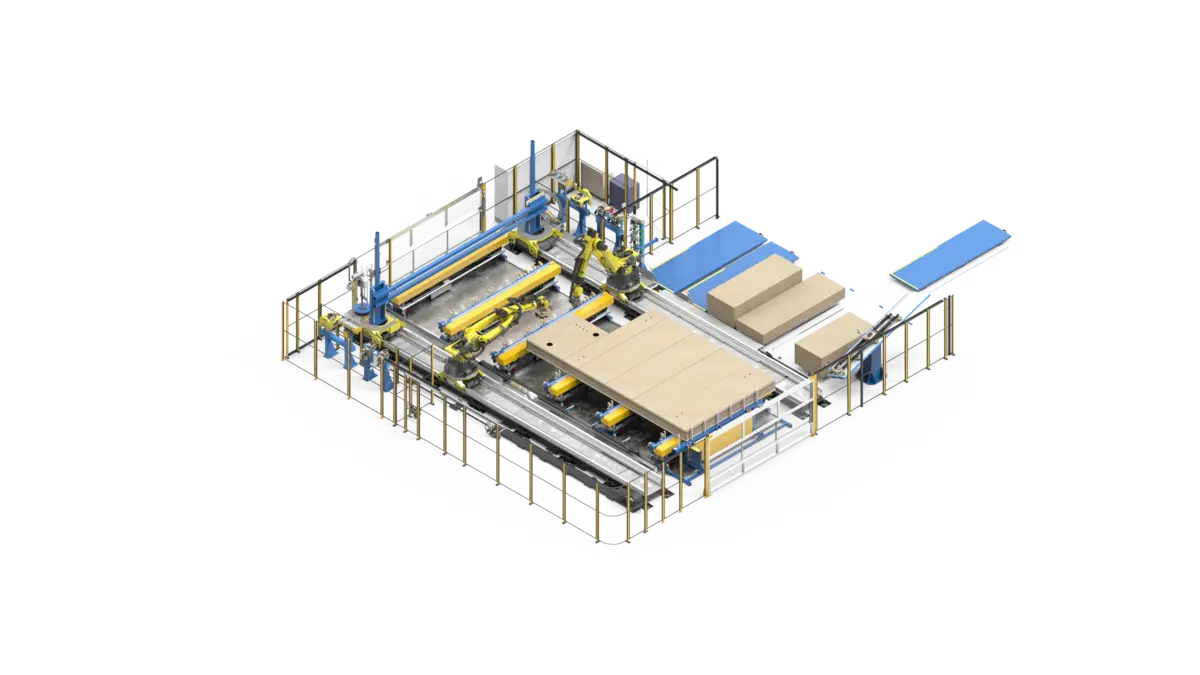
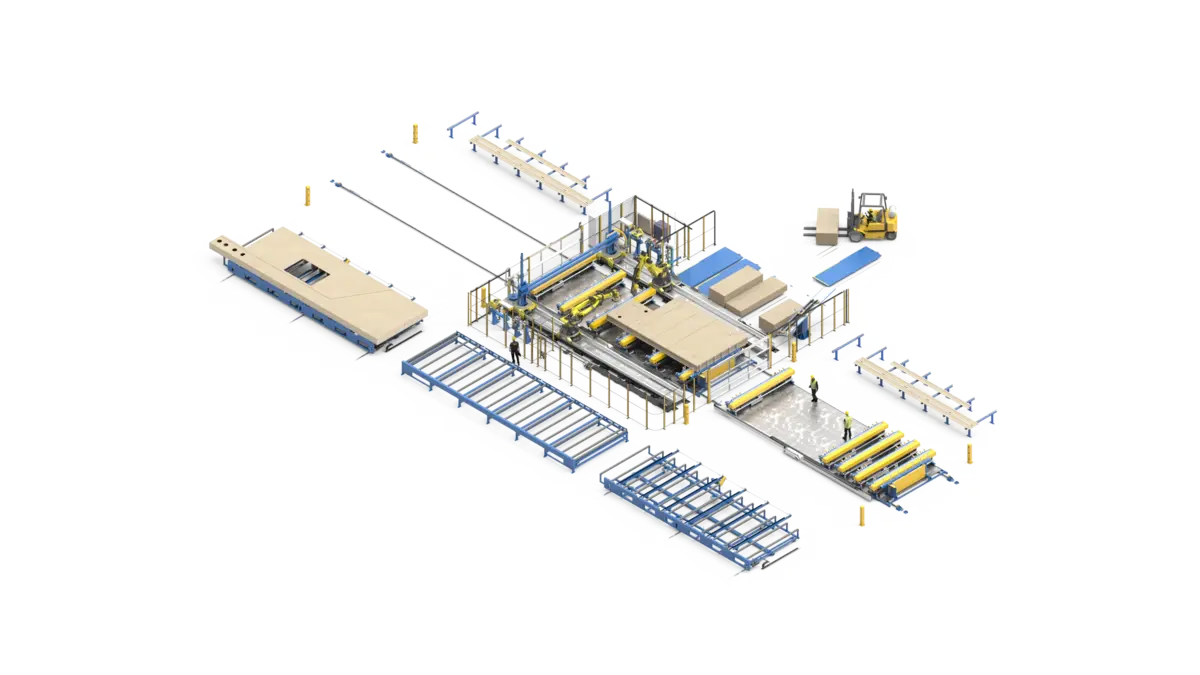
The standard AutoFloor. ZeroLabor robots take the place of the portal and sheathe and fasten the element under robot control, for the highest capacity and the lowest manning.
Products & systems / AutoFloor System
Floor cassettes, ceilings and roof elements, CAD/CAM operated.
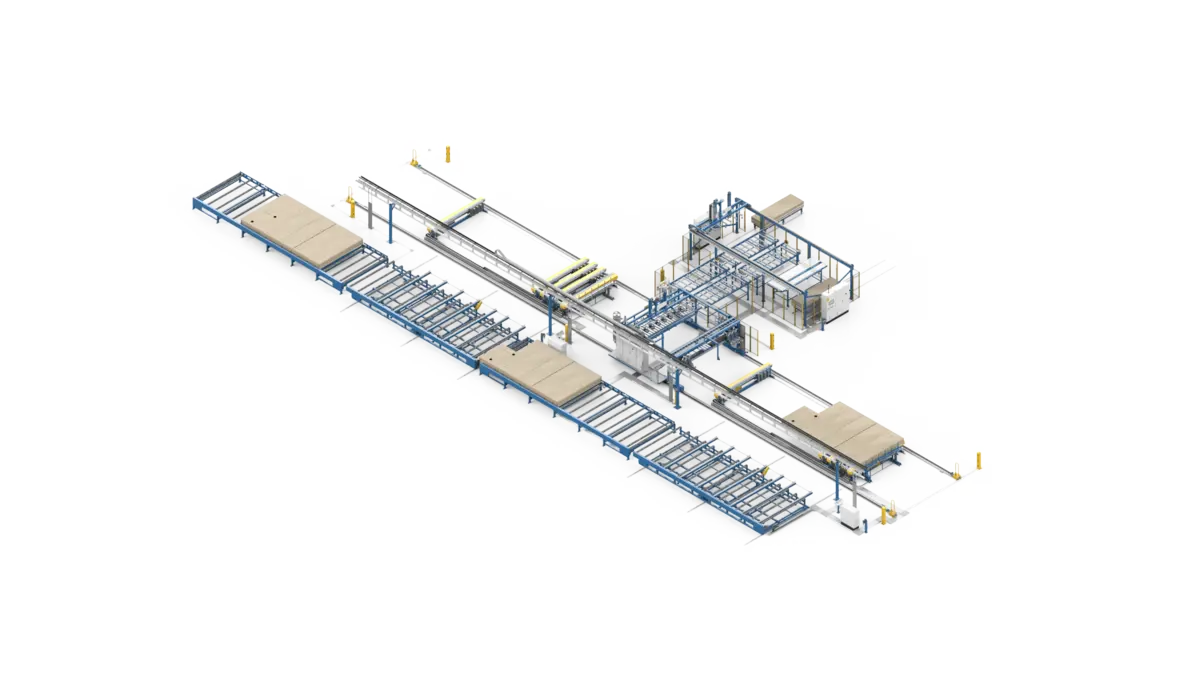
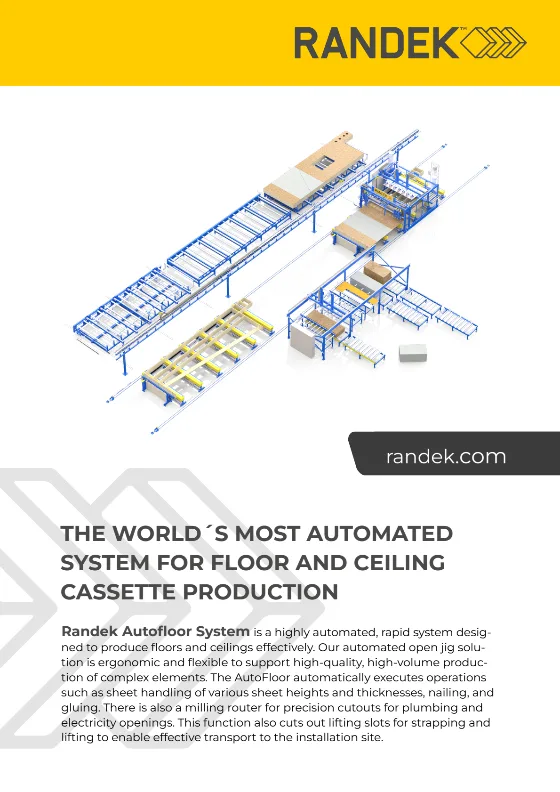
The Randek AutoFloor System is the world’s most automatic production system for floor elements, floor cassettes, roof ceilings and roof elements.
Beams are laid out on an open jig that sets itself from the CAD file. The sheets are then added, glued and fastened by ZeroLabor robots, the standard line, or by a single automatic portal that also saws, mills and marks in the same pass.
AutoFloor builds floor cassettes, roof and ceiling elements with beams in timber or light gauge steel. The jig clamps both the same way; the fastening tools are chosen for the material you build with. Beams are laid out on the open jig and the sheets are added, glued and fastened on top. The flexible support handles complex, non-square shapes as easily as rectangular ones.
Both variants share the same open jig, sheet in-feed and control. What differs is how the sheets go on. Starting smaller? EasyFloor is the semi-automatic step before AutoFloor.

The standard AutoFloor. ZeroLabor robots take the place of the portal and sheathe and fasten the element under robot control, for the highest capacity and the lowest manning.

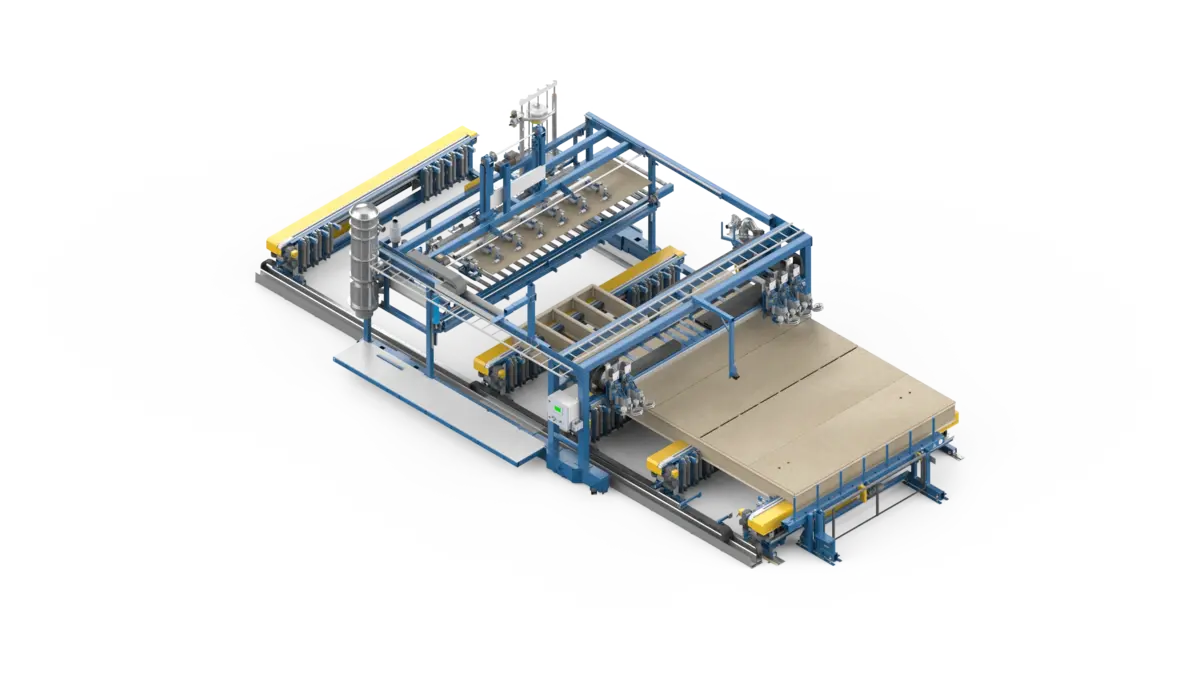
A single automatic portal glues, adds sheets, fastens, saws, mills and marks in one pass over the open jig. The compact way into automated floor and roof elements.
Whichever way the sheets go on, the element is built on the same base.
Files go directly from the design software to the line, with nothing entered again at the machine. The same planning and control software schedules floor, roof and ceiling elements.
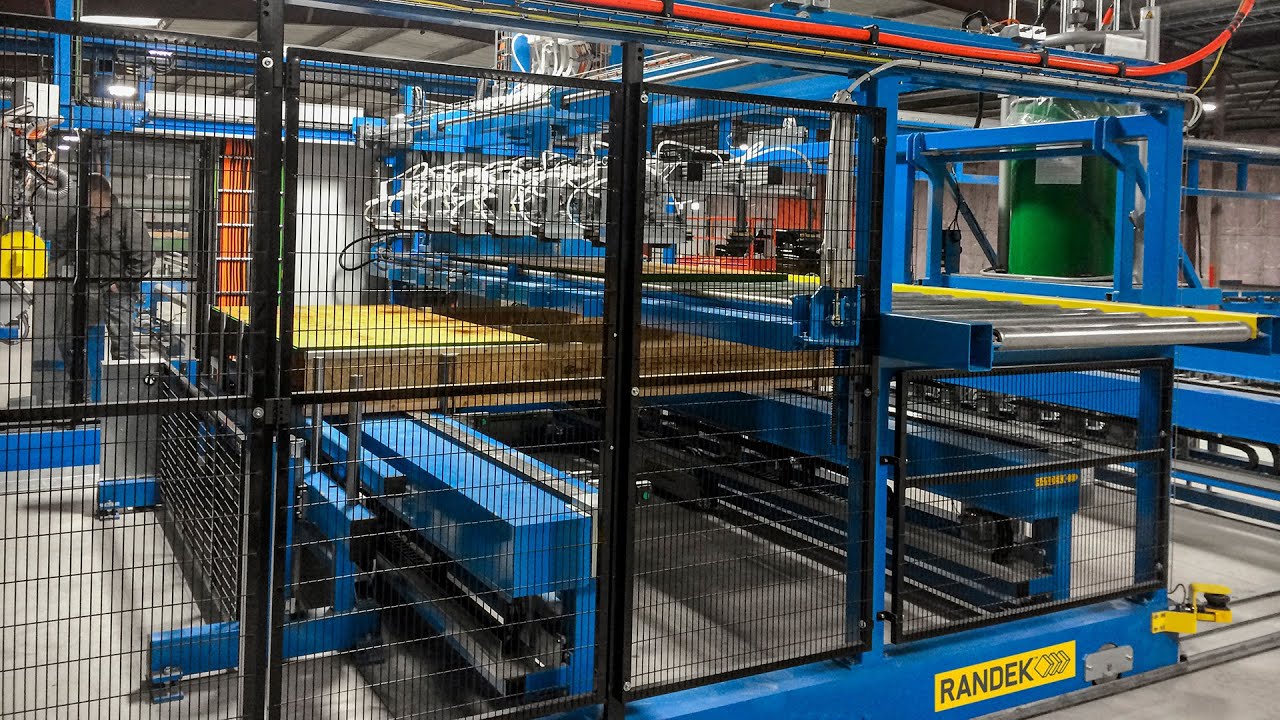
The jig is open, so the operator can walk inside it. The pin pairs position themselves from the CAD file, and the operator raises each pair with a push button as the element is built beam by beam.
The truck driver sets whole sheet packages on the in-feed conveyors, and the line handles the sheets from there. The buffer holds three or more stacks, each in its own position, for high material utilization.
Two robots share the tools and change between them automatically, much like a ZeroLabor sheathing cell on AutoWall.

On the standard line a ZeroLabor robot cell takes over from the portal: two robots place, fasten, saw and mill the sheets on the element. The jig, the sheet in-feed and the control stay the same. More about ZeroLabor →
On the portal line a single automatic bridge glues, adds sheets, handles the tongue and groove connection, staples and nails, saws, mills and marks with inkjet, in the same pass.

One automatic bridge travels over the open jig and does the whole job on its own: it picks and places the sheets, glues and fastens them, and saws, mills and marks the finished element. The parts below all sit in the bridge.
High-volume floor line: nailing, milling of openings, sheet cutting, gluing, marking and handling in one.
DetailsTell us what you build today and where the bottleneck is. We will point you to the right team: locally where we have one, from Sweden where we do not.
We use analytics cookies to understand how the site is used. They are only set if you accept. Privacy policy