Products & systems / AutoEye System

ROOF TRUSS

AutoEye System

Vision-guided truss production without manual jig setup.

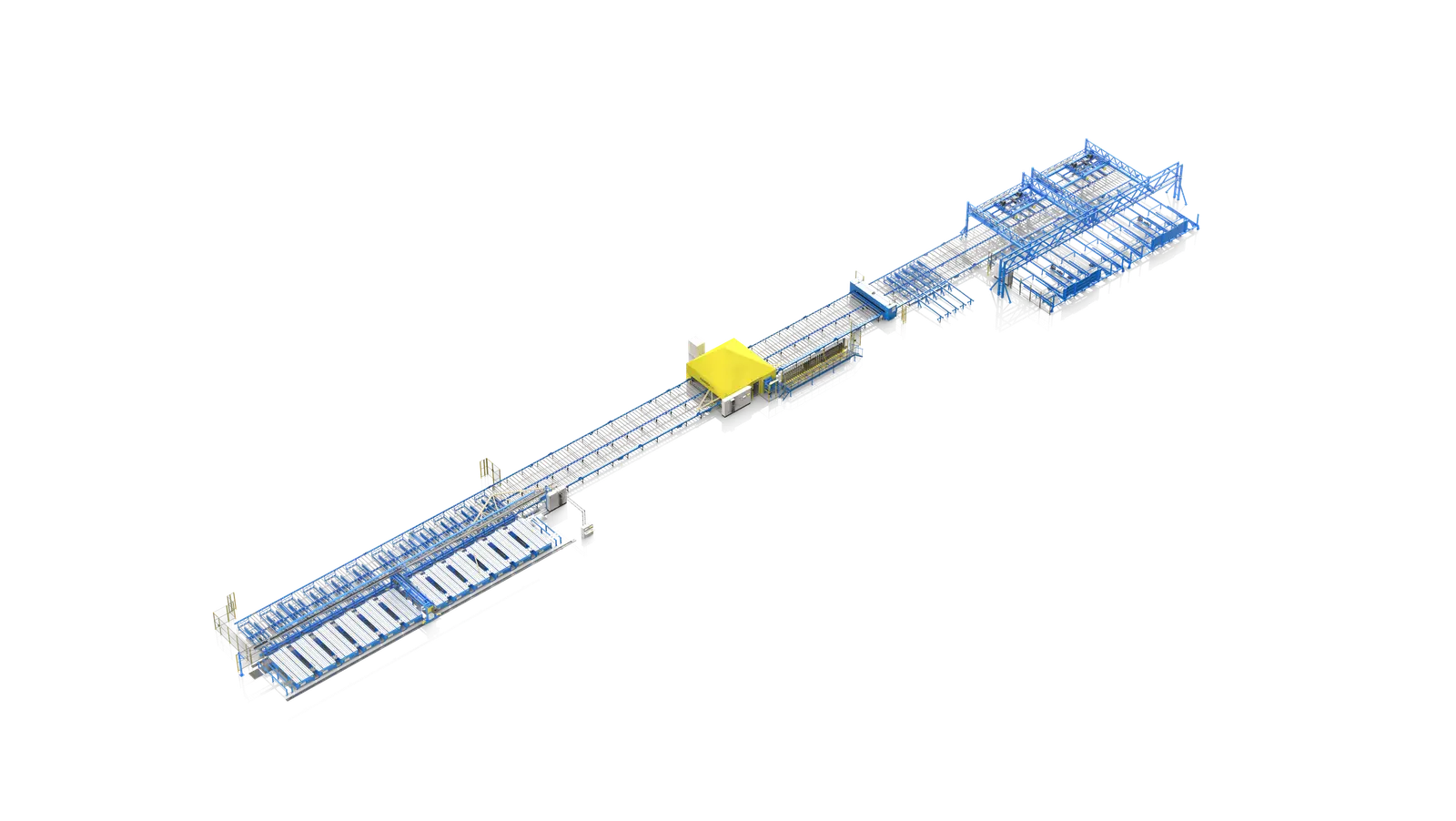
75–100 × 12–15 m
line footprint, length × width
3–4
operators needed
~160
joints per hour, single fixture table
~300
joints per hour, double fixture tables
27 tonnes (264 kN)
adaptive press force

All 8 figures & sources

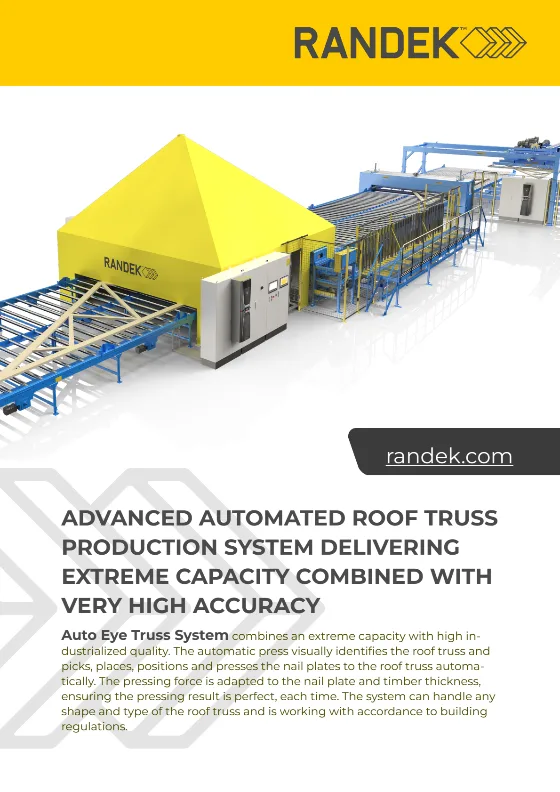
A system developed for automatic production of roof trusses. The system combines high capacity with industrialized quality. The automatic press visually identifies the roof truss. It then picks, places, positions, and presses the nail plates to the roof truss automatically. The pressing force is applied to the nail plate producing consistent pressing results. Any roof truss shape can be handled by the system.

Machine vision identifies every joint, calculates nail plate position and controls the pressing sequence.

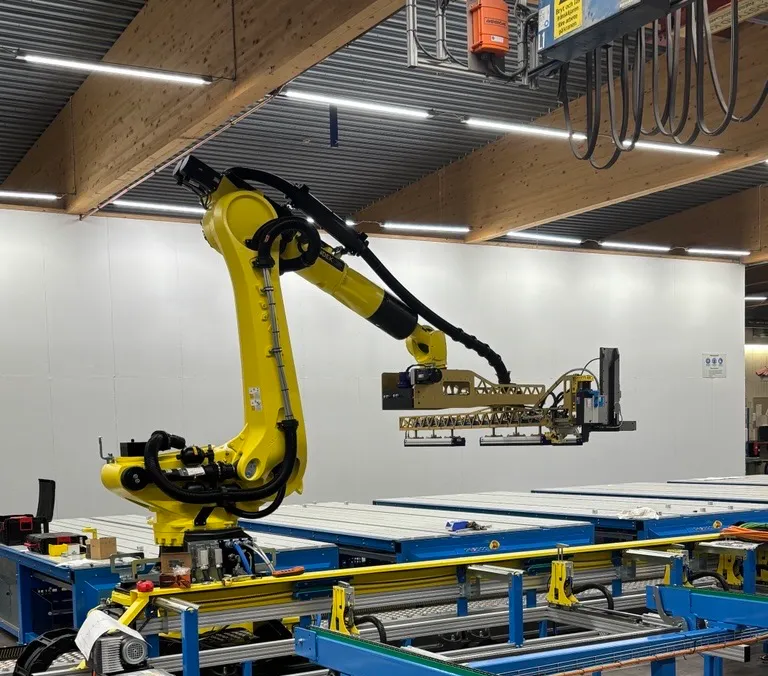
A robot assembling roof trusses in Randek’s assembly workshop
TIMBER ROOF TRUSSES

Timber trusses, joined by nail plates

AutoEye builds timber roof trusses of any shape. At every joint the vision system identifies the connection and presses a nail plate home from both faces, giving consistent, load-bearing joints without the effort and variability of manual pressing. The nail plate is the fastener; the vision system is what lets one line handle any truss shape.

STATIONS & OPTIONS

Three areas, from assembly to the stack

The AutoEye Truss System is built from three areas. Each can be configured in several ways depending on factory footprint and desired output.

Station 1

Truss Assembly

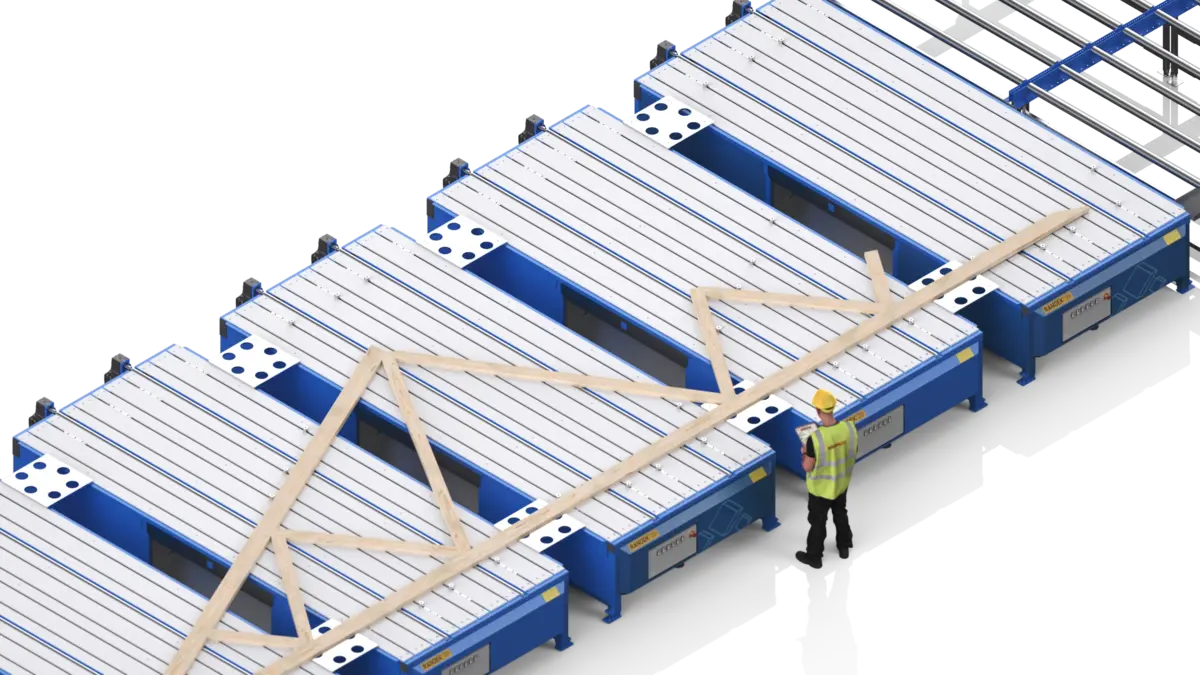
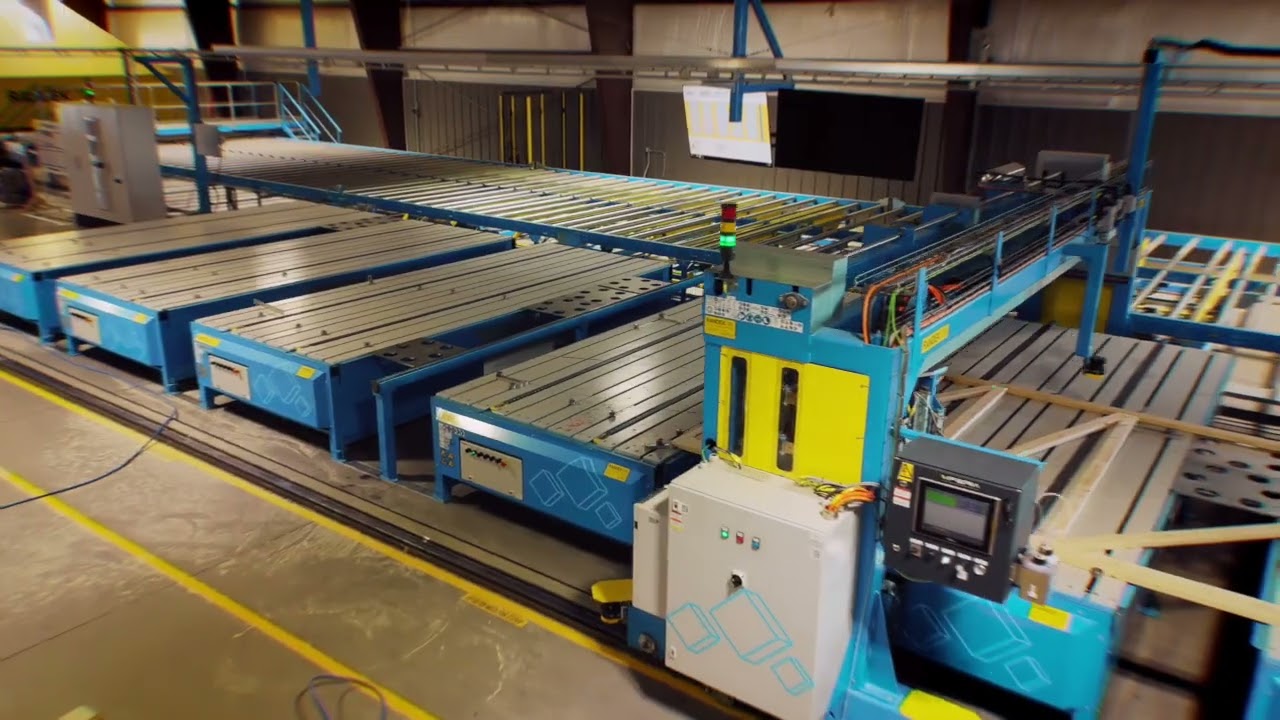
Where the roof truss is built. The jig tables set the pucks for each truss automatically and overhead LAP CAD-PRO laser projection shows where every member goes. The members are laid out and the joints stapled, so the truss holds its shape on the way to the press.
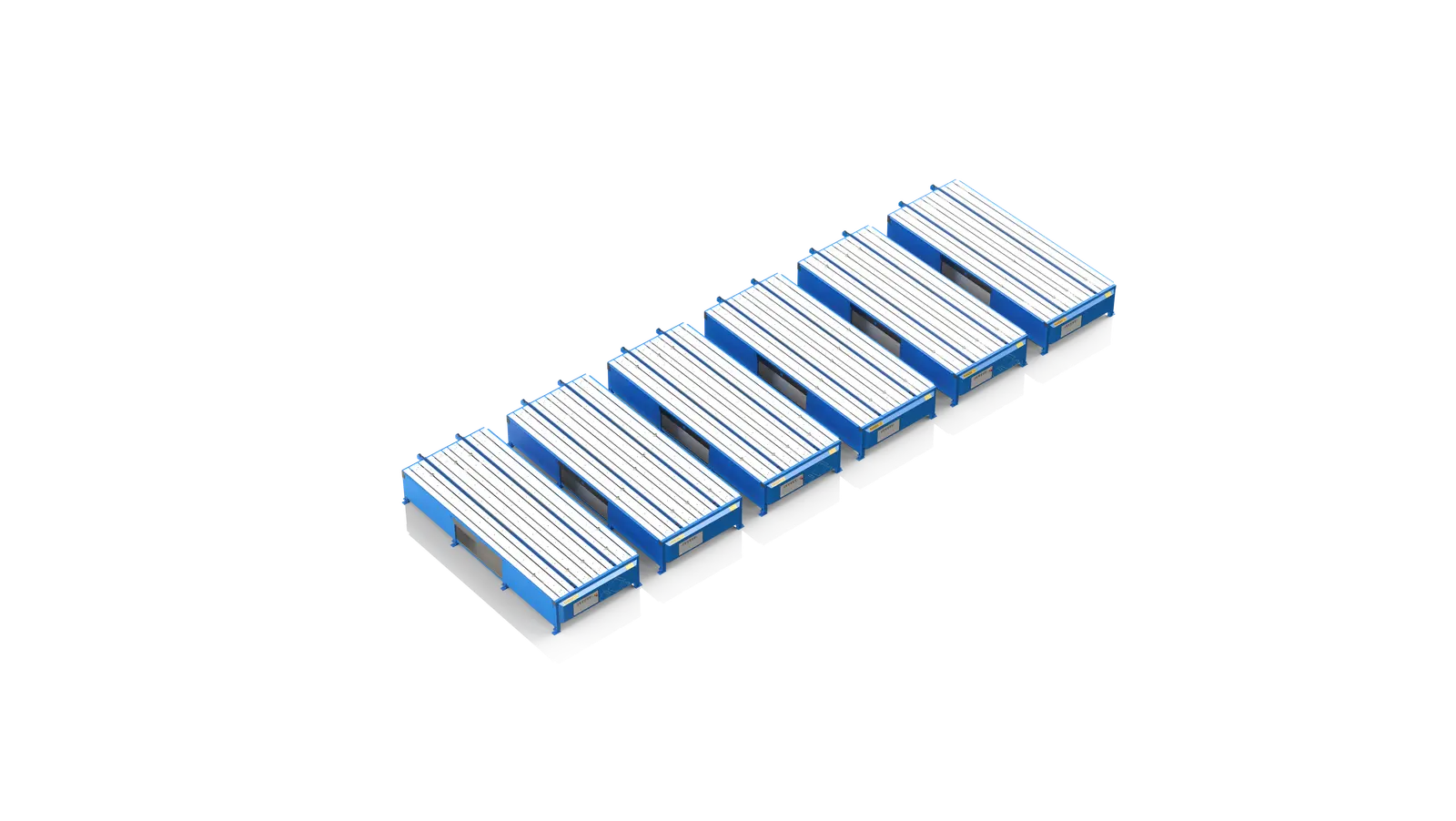
AutoEye jig tables (puck tables) for laying out the roof truss
Standard
Jig tables

Flexible, high-speed jig system with automatic puck placement per truss. Operators place the timber; walk-between access; straight or angle-transfer configurable.

Option
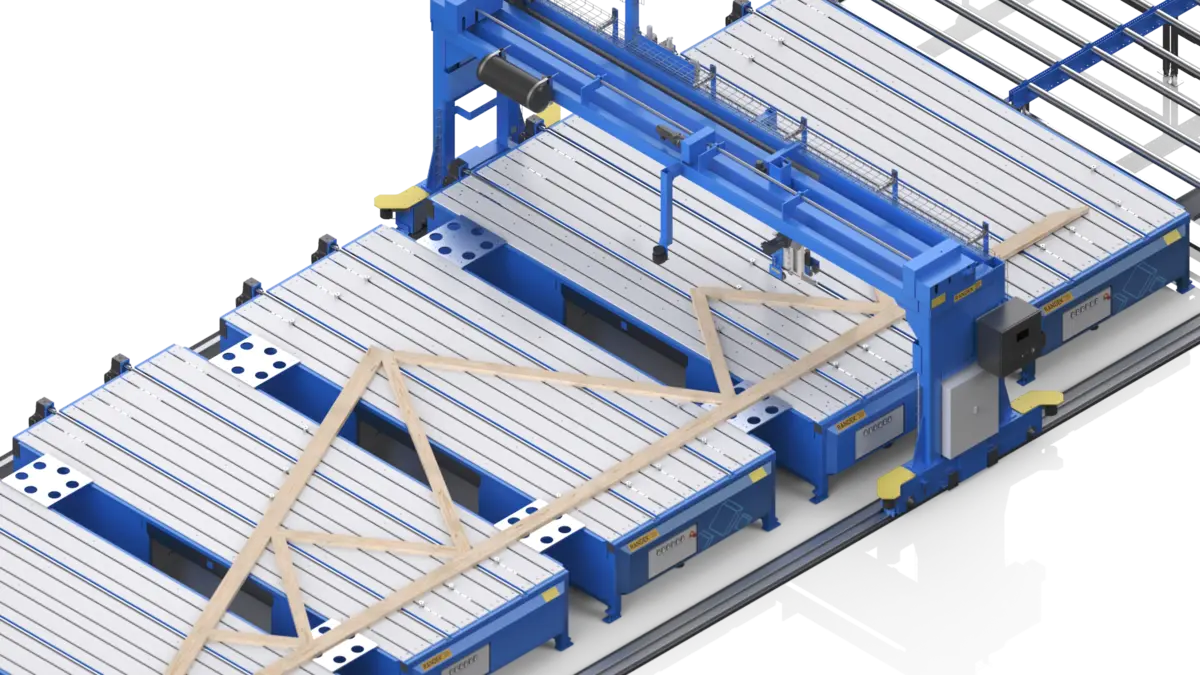
Stapling bridge

Staples the joints to hold the truss together while transferring into the press. Optional ink-jet printer marks each truss for site assembly.

Option
Angle transfer

Automatically moves the truss from the jig tables to the infeed buffer conveyor.

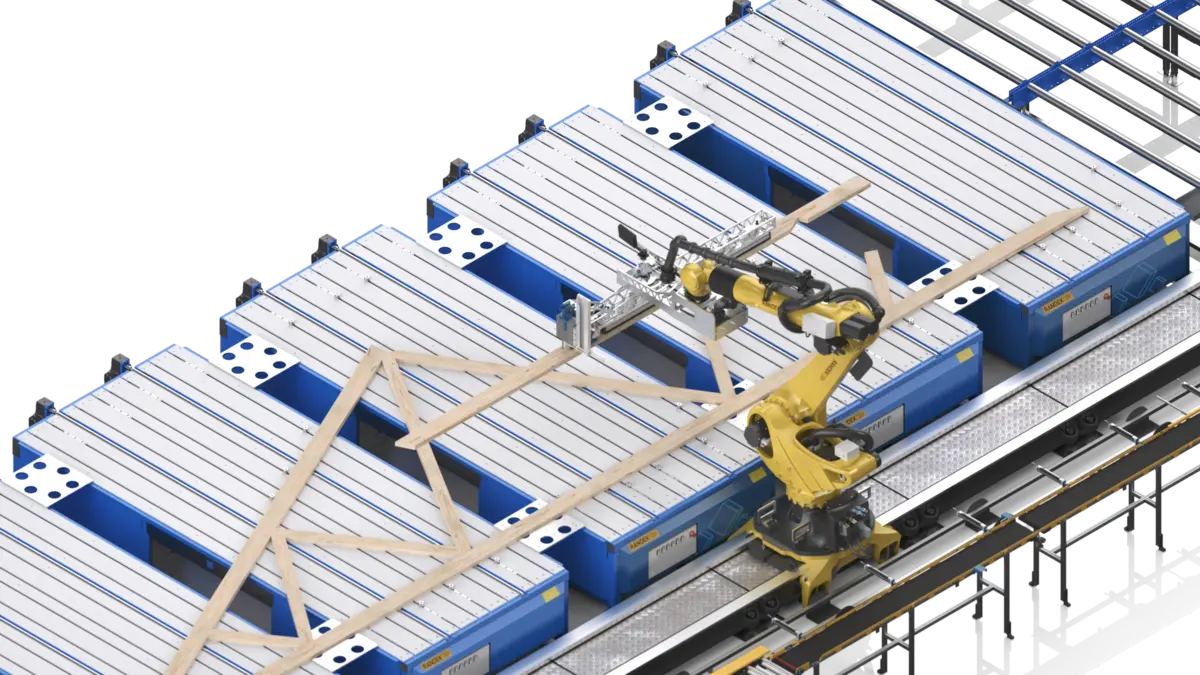
Robotic
Robotic truss assembly

ZeroLabor robots lay out the members and staple the joints, for the highest-capacity lines.
Station 2

Plate Press

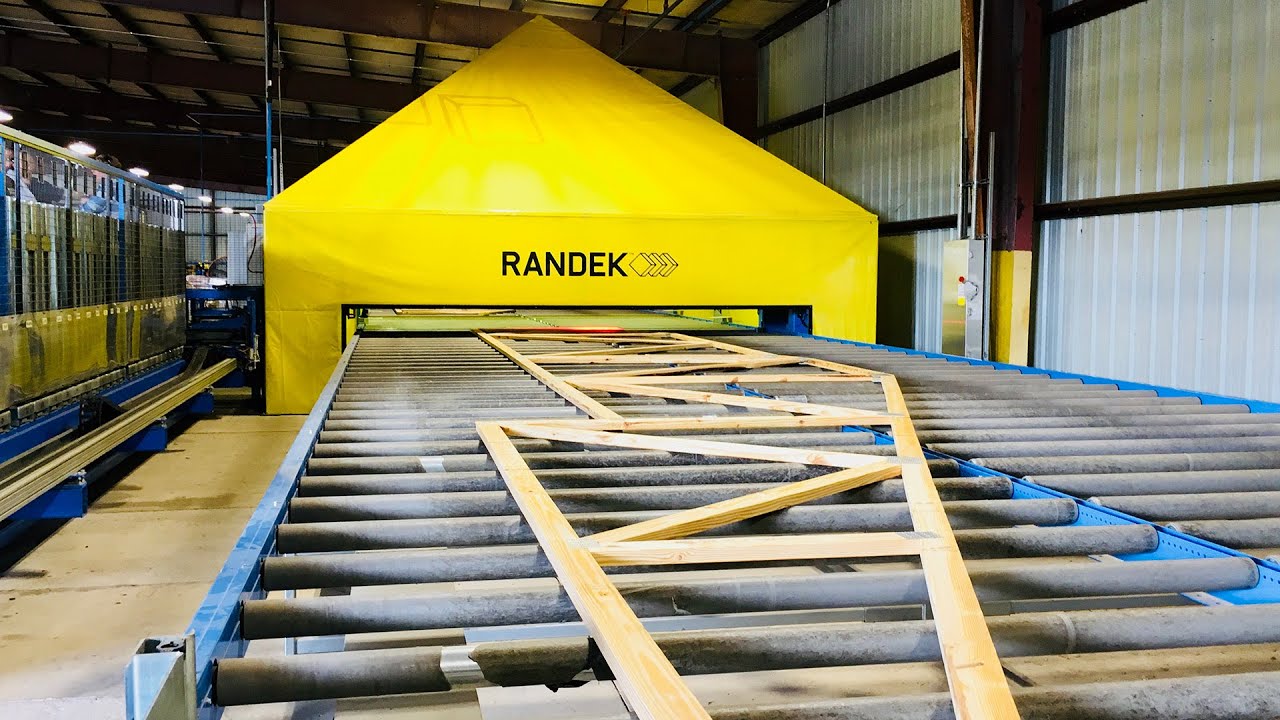
Where the nail plates are pressed fully into the joints. As the assembled truss passes through, the press seats the plates from both faces to lock every joint. That is the step that turns a laid-out truss into a finished, load-bearing one.

AutoEye vision-guided nail plate press
Standard
Vision system

The press photographs each joint and matches it to the truss file, placing the plate exactly even when the truss deviates in length or shape.

Standard
Nail plate handling

Picks the correct plate in advance from the CAD file and works simultaneously with the press. Magazine up to 30 slots standard, 35 extended.

Standard
Adaptive press, up to 27 t

Presses the plates with the required force, up to 27 tonnes (metric, 264 kN), for consistent seating.

Option
Roller press, over 27 t

A roller press for when a press force higher than 27 tonnes (metric, 264 kN) is required.

Station 3

End of Line

Where finished trusses leave the line: received, collected and stacked, ready for storage or transport. The stacking end sets the longest truss the line can pack automatically, and it is the last decision on the line, not the first.

AutoEye large vacuum stacker at the end of the line
Automatic
Vacuum stacker large

Max 24.5 m / 80.38 ft. Stacks horizontally, optional upraiser for standing packs; predefined stacks organised in software, ready for transport.

Automatic
Vacuum stacker small

Max 12 m / 39.37 ft. Stacks horizontally; easy forklift handling of the packs.

Automatic
Stacker

Standing packs, organised into predefined stacks in software.

Manual
Manual stacker

Moves the truss from the conveyor; operator-handled, handles different truss sizes.

ASSEMBLY & FIXING

Three ways to build the truss before the press

On every AutoEye line the jig tables set the pucks automatically and LAP CAD-PRO laser projection shows where each member goes. What differs is who lays out the members and who staples the joints, so the truss holds its shape on the way to the press, where the nail plates go on.

An operator laying out a roof truss on AutoEye jig tables
MANUAL

Manual layout, manual stapling

Operators lay out the members against the pucks and the laser, and staple the joints by hand. The simplest way in, with the vision-guided press doing the rest.

Operator lays out · operator staples
A stapling bridge over AutoEye jig tables, stapling the joints of a laid-out truss
SEMI-AUTOMATIC

Manual layout, stapling bridge

Operators lay out the members, and a stapling bridge travels over the jig tables and staples the joints. Optional ink-jet marking of each truss for site assembly.

Operator lays out · bridge staples
A ZeroLabor robot laying out and stapling a roof truss on AutoEye jig tables
ROBOTIC

Robotic layout and stapling

ZeroLabor robots lay out the members and staple the joints, for the highest-capacity lines. Robotic truss assembly is in development.
Robot lays out · robot staples · in development
EXAMPLE LAYOUTS

From a compact line to a large-stacker line

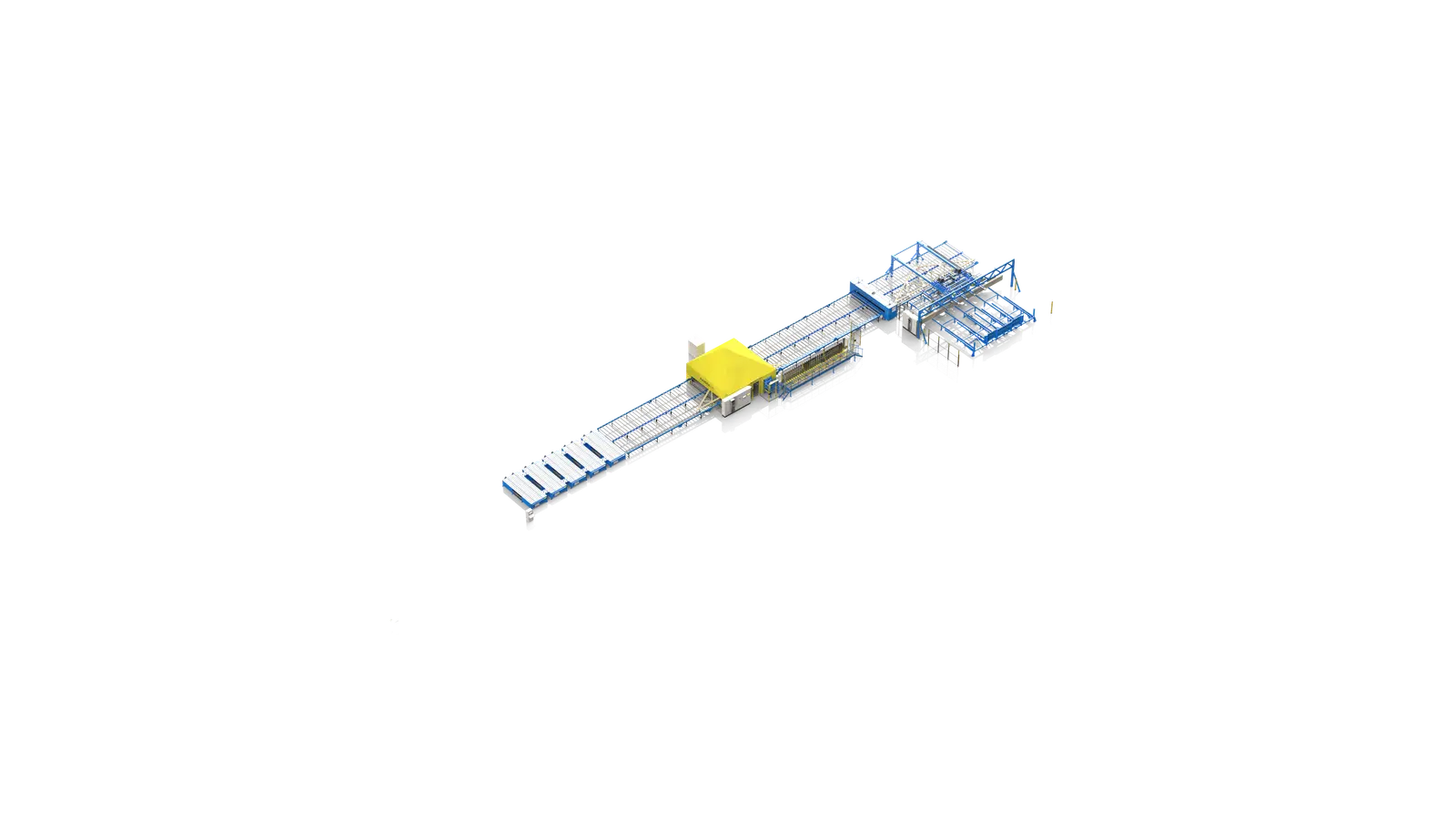
AutoEye is configured to your factory and output. The example lines below differ mainly in the stacking end, which sets the longest truss the line can pack automatically, and in the number of jig tables and the automation around them. These are example layouts, not a fixed catalogue. We plan the exact line with you in a pre-study.

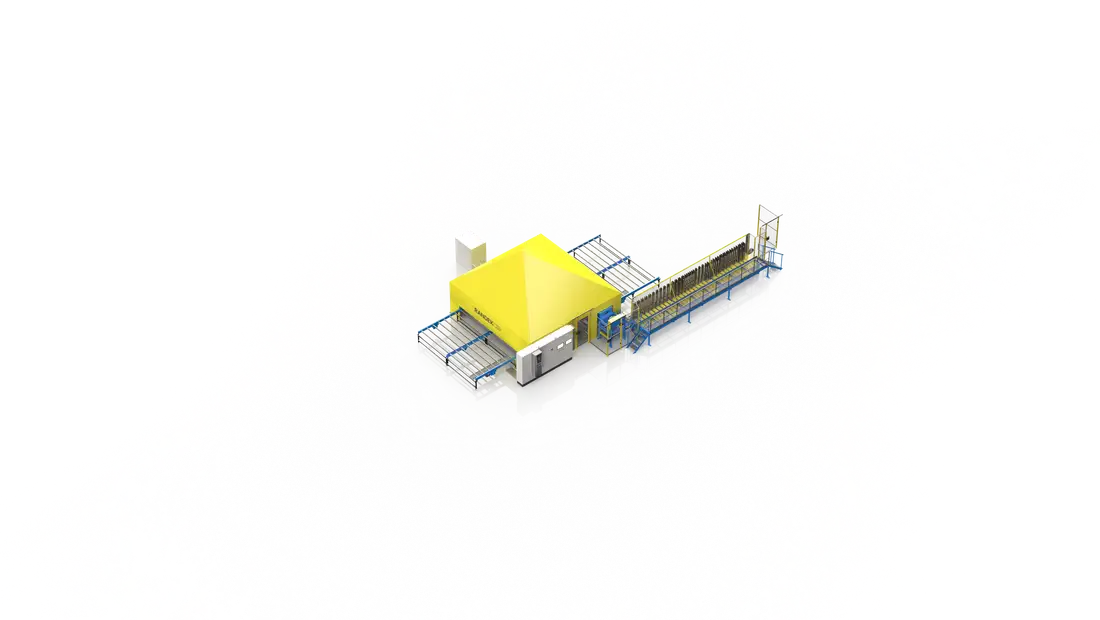
AutoEye straight line with a small vacuum stacker, isometric view
COMPACT

Straight line, small vacuum stacker

A straight line ending in a small vacuum stacker: the most compact AutoEye footprint, for shorter trusses and a smaller hall.

Vacuum stacker small · up to 12 m
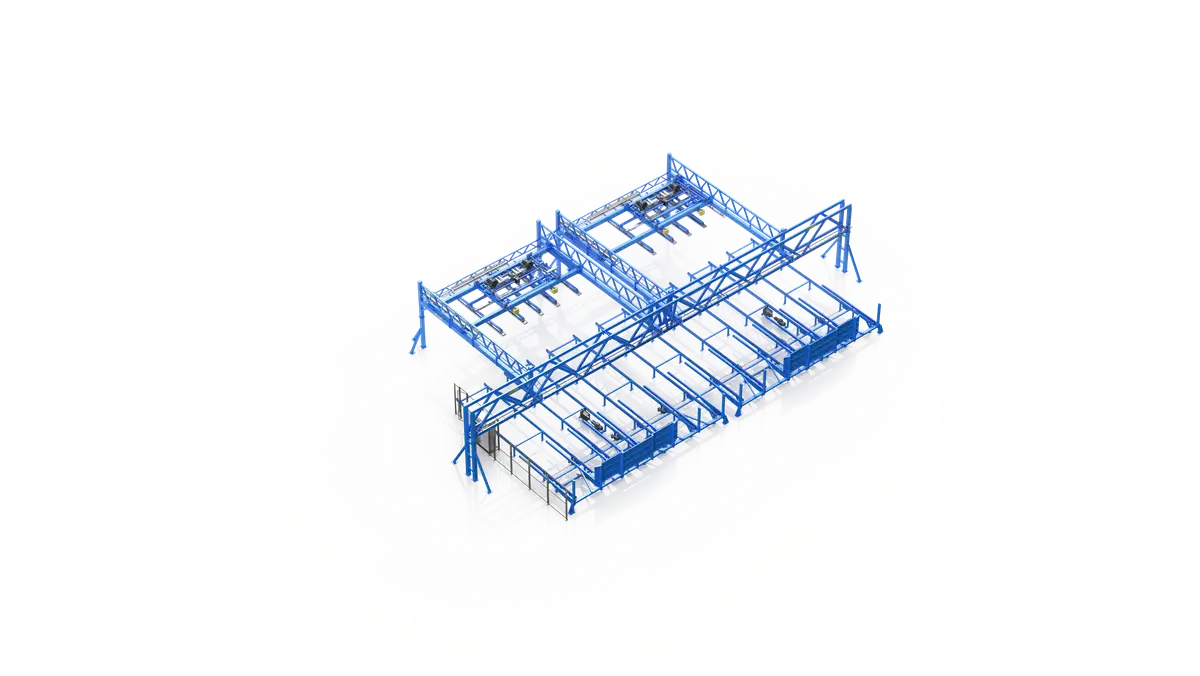
AutoEye line with a manual stacker and a large vacuum stacker, isometric view
LARGE

Manual + large vacuum stacker

A manual stacker with a large vacuum stacker, packing full-length trusses horizontally in predefined stacks ready for transport. This is the highest-capacity example.

Manual stacker + vacuum stacker large · up to 24 m
SPECIFICATIONS

Nail plate sizes

The magazine holds up to 30 slots as standard and up to 35 extended. The system picks the correct plate in advance from the CAD file; rotation and positioning come from the vision system.

 MillimetresInches
Width50–290 mm2–11.5 in
Length100–510 mm3.9–20.1 in
SEE IT RUN

AutoEye System in production

AutoEye
Roof truss production made easy: FrameTec factory walkthrough, Randek AutoEye
Speedy Profitable Roof Truss Production - Auto Eye
KEY FIGURES

AutoEye System in numbers

75–100 × 12–15 m
line footprint, length × width
Footprint depends on configuration. 246–328 ft by 39–49 ft.
3–4
operators needed
~160
joints per hour, single fixture table
Output depends greatly on truss type and configuration.
~300
joints per hour, double fixture tables
27 tonnes (264 kN)
adaptive press force
Roller press available when higher force is required.
30–35
nail plate magazine slots
Standard up to 30 slots, extended up to 35.
50–290 mm
nail plate width
Length 100–510 mm. 2–11.5 in by 3.9–20.1 in.
9 sec
per nail plate pairing
AutoEye Truss System: picks, positions and presses nail plates with machine vision.
In production

Customers running AutoEye System

Norway · since early 2000s

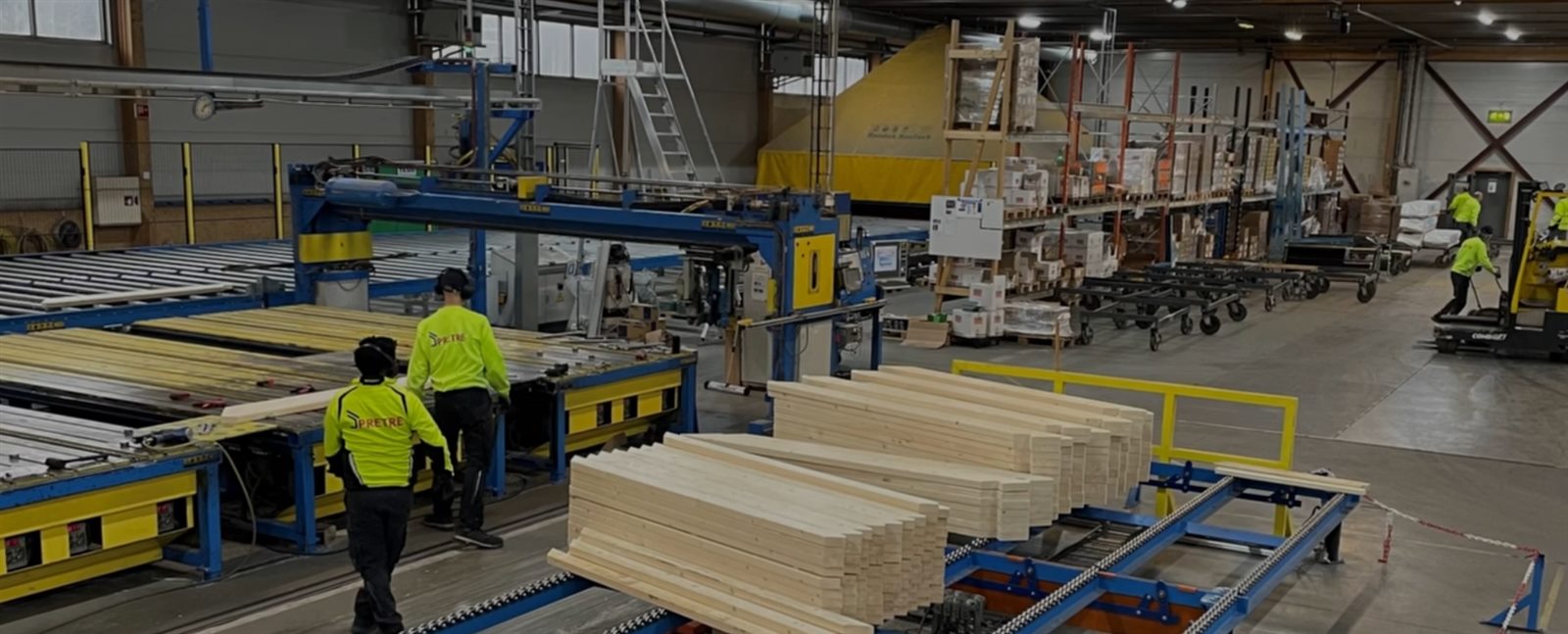
PreTre

AutoEye
“If you want to make money in truss production, you need an AutoEye.”
Lars Erik WetterwaldProduction and Development Manager
Read the full story
Germany · since 2019

Holzbau Potts

AutoEye
“With the Randek system we can guarantee a consistently high quality of nail-plate trusses. Every source of error is eliminated by the system.”
Richard Potts, Holzbau Potts
Read the full story
Australia · since 2018

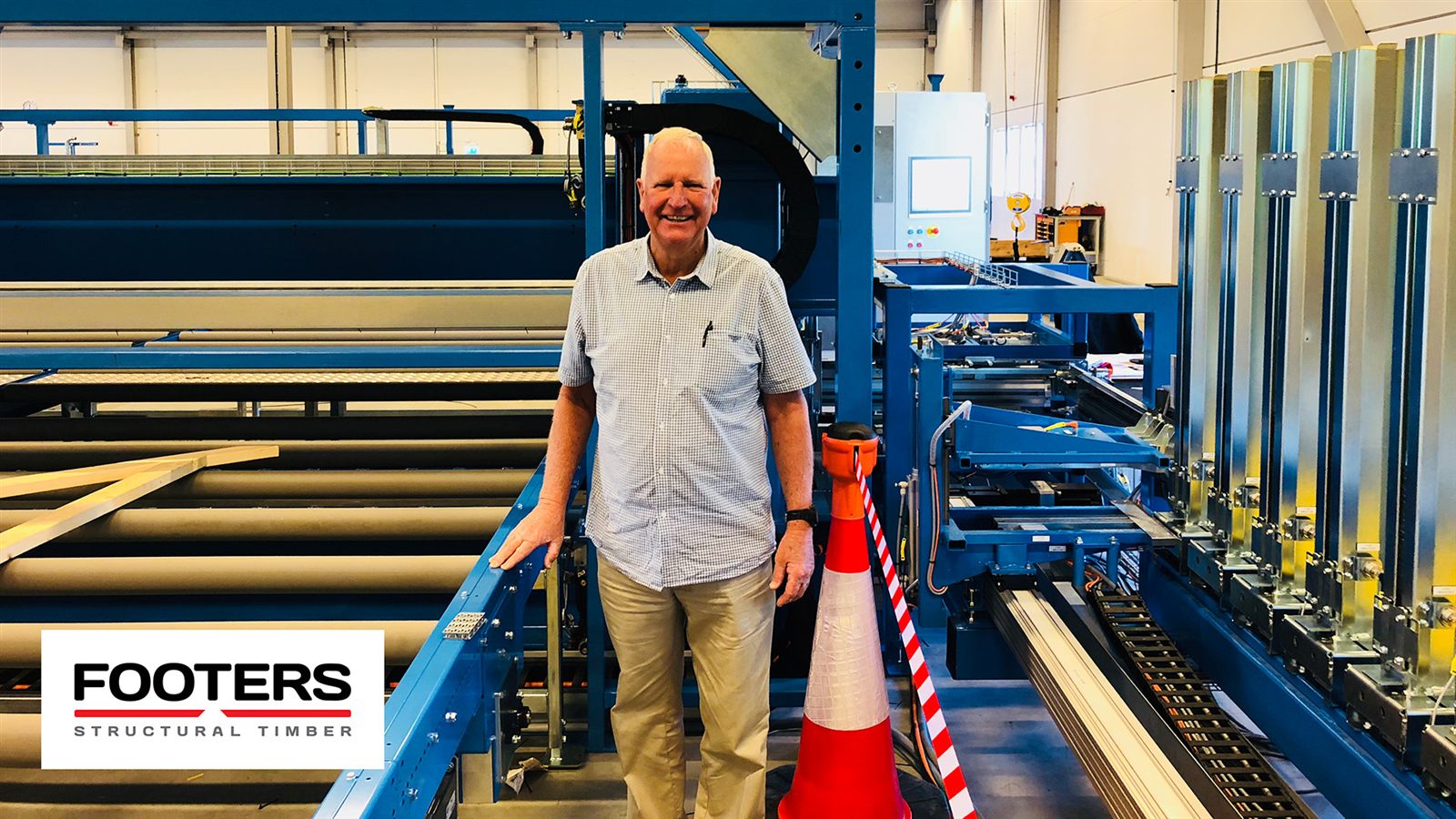
Footers Structural Timber

AutoEye
“The plate placement accuracy and dimensional accuracy are unmatched by the previous systems.”
Footers Structural Timber
Read the full story
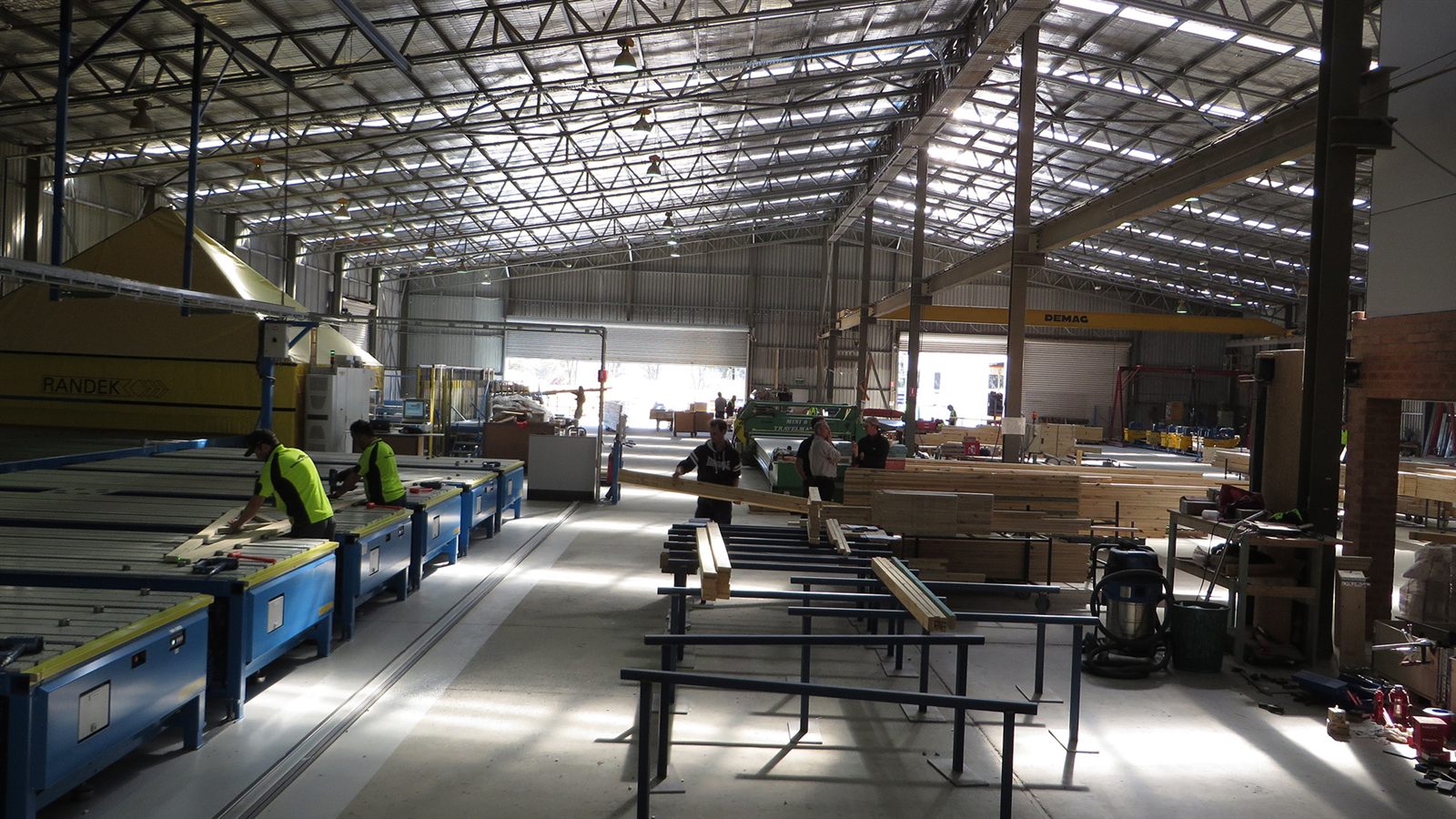
Australia · since 2013

Universal Trusses

AutoEye
“Now we know a joint will be processed every 10–11 seconds, giving us greater control.”
Universal Trusses
Read the full story
United States · since 2022

FrameTec

AutoEye · Randek Planner
“We have two AutoEye roof truss systems because they build the highest quality trusses in the world, and they do it faster and with less labor than anything else.”
Kyle BrockCEO
Read the full story
United Kingdom

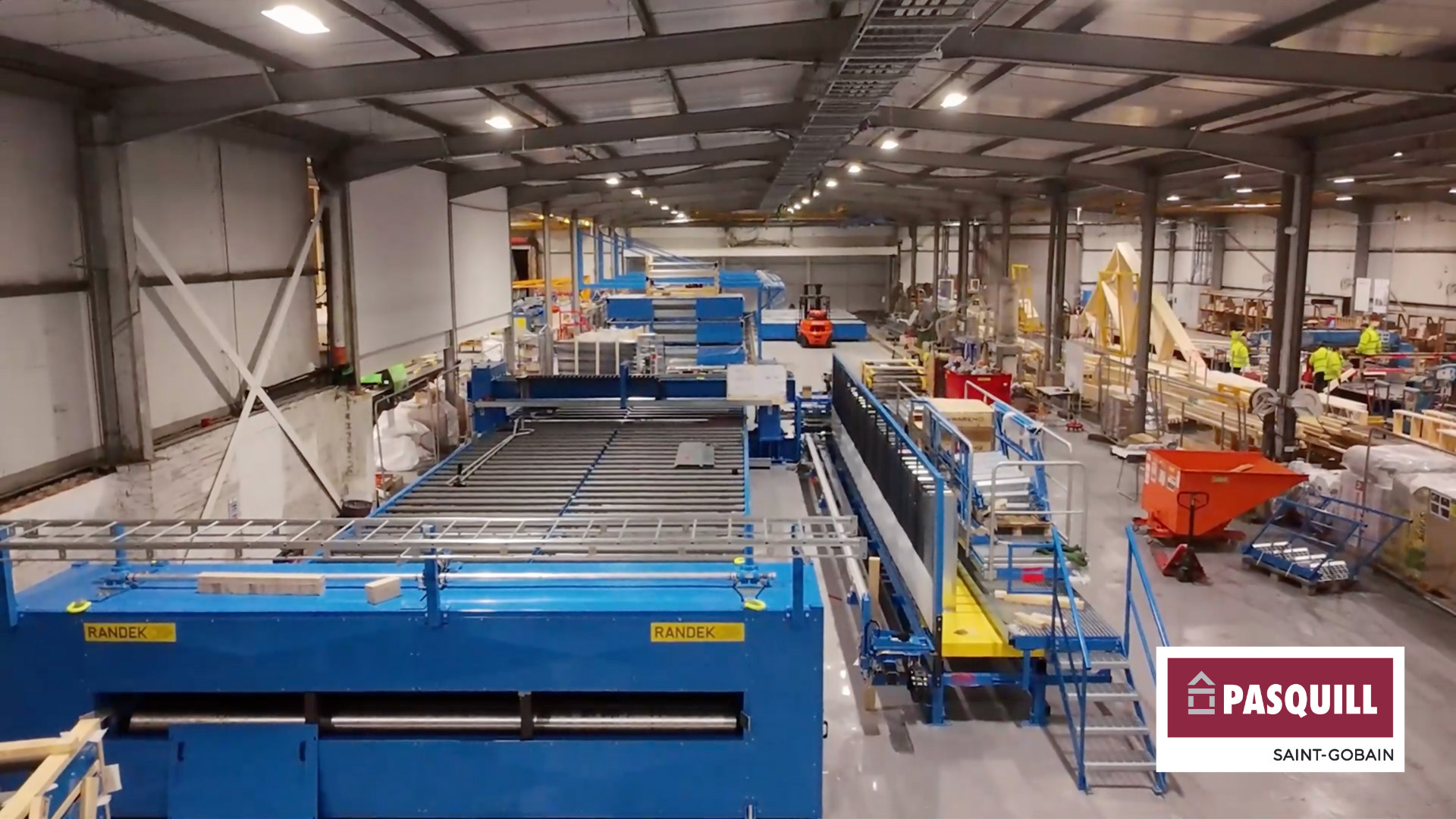
Pasquill (Saint-Gobain)

AutoEye
“Until now, our Redhill site has been operating at full capacity, but the introduction of the AutoEye technology will see the site significantly expand its capabilities, allowing for approximately double the output for the same amount of labour.”
Pasquill
Read the full story
Australia · since 2021

Timbertruss

AutoWall with ZeroLabor and Robotic Framing · AutoEye · Stud cut saw
“We’re always looking for ways to do better. And Randek’s been a big part of that journey.”
Mark McDonald, CEO, Timbertruss
Read the full story
QUESTIONS

What buyers ask first

How much space does an AutoEye line need?
Around 75–100 m (246–328 ft) long by 12–15 m (39–49 ft) wide. The exact footprint depends on how the line is configured.
How many operators does the line need?
Three to four people.
What output can we expect?
Around 160 joints per hour with a single fixture table and around 300 with double fixture tables. Output depends greatly on the type of trusses made and on the configuration.
How long a truss can be stacked automatically?
Up to 24.5 m (80.38 ft) with the large vacuum stacker and up to 12 m (39.37 ft) with the small one. Both stack horizontally, with an optional upraiser for standing packs.
What if we need more than 27 tonnes (metric, 264 kN) of press force?
A roller press is available as an option for when press force higher than 27 tonnes (metric, 264 kN) is required.
Is there a step between manual truss production and AutoEye?
Yes. Randek Truss System NT, with press and crane systems and optional LAP CAD-PRO laser projection from LAP GmbH, is the traditional way to produce trusses efficiently before a fully automated line. See how to choose the right level of automation.
Downloads

Brochures and flyers

The brochures go into more detail than this page, and they are what you take into an internal meeting.

Your next factory starts here

Talk to Randek

Tell us what you build today and where the bottleneck is. We will point you to the right team: locally where we have one, from Sweden where we do not.

Talk to your team