R2
ZeroLabor R2
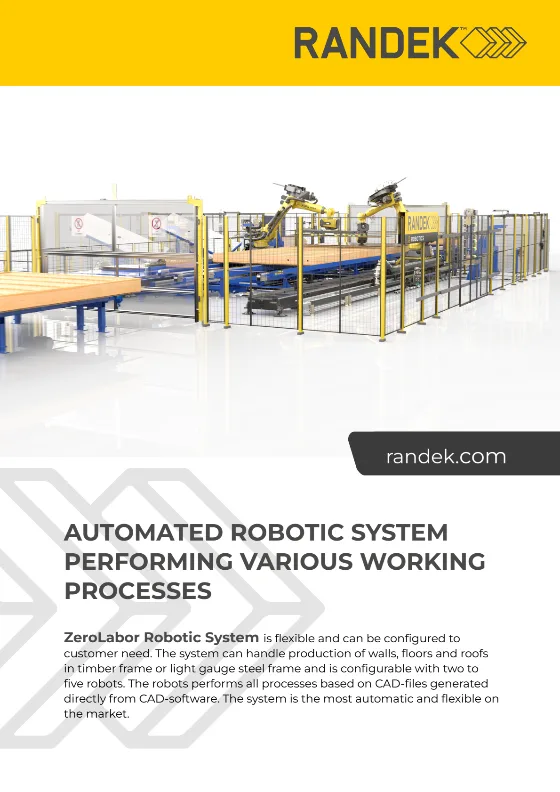
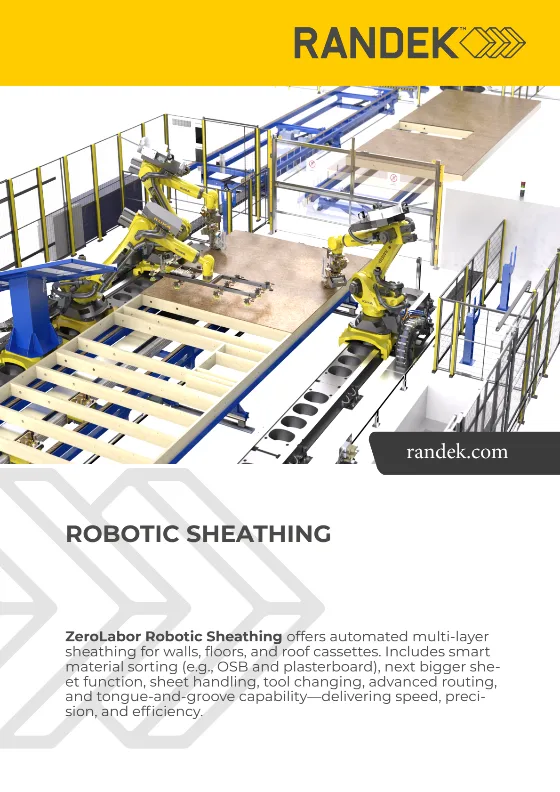
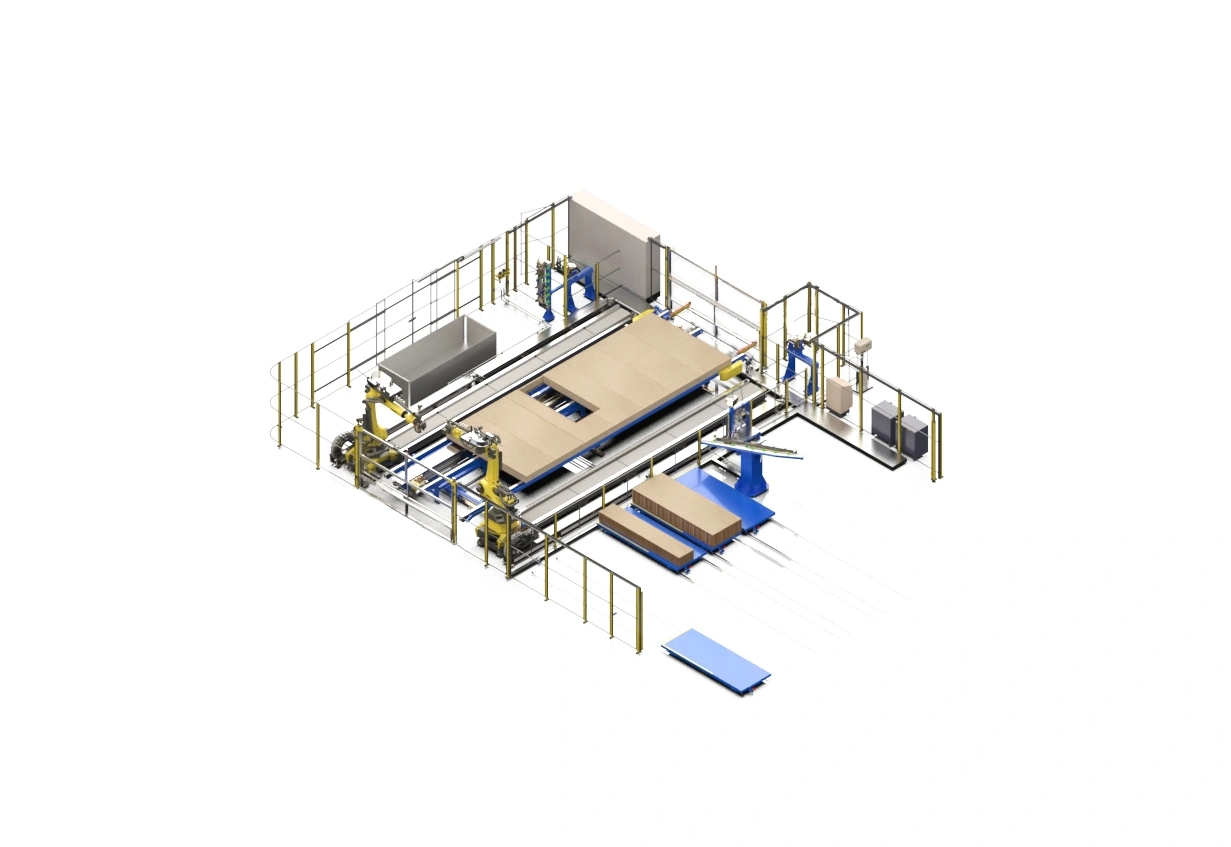
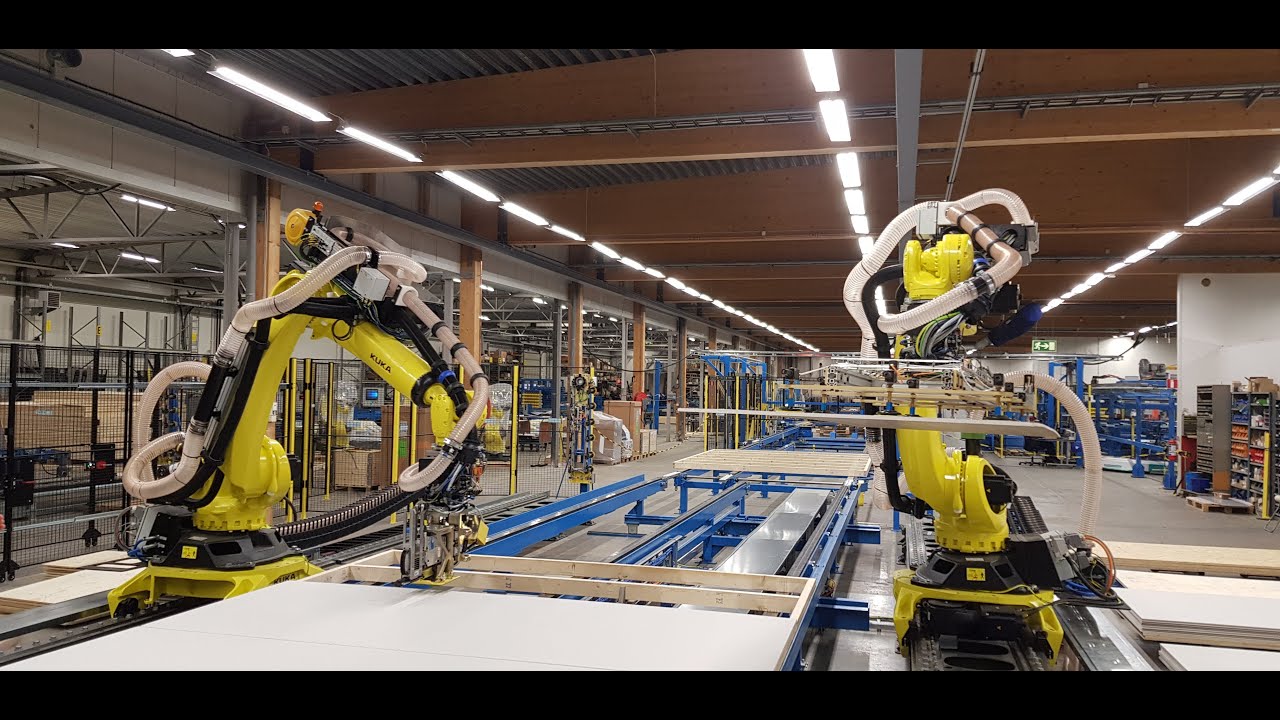
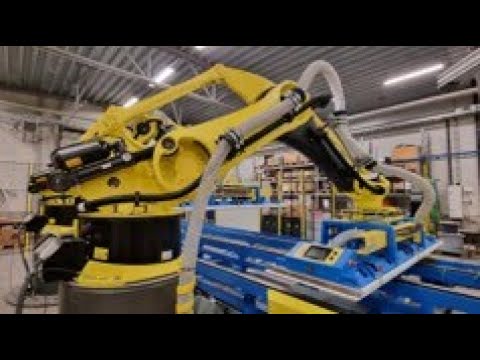
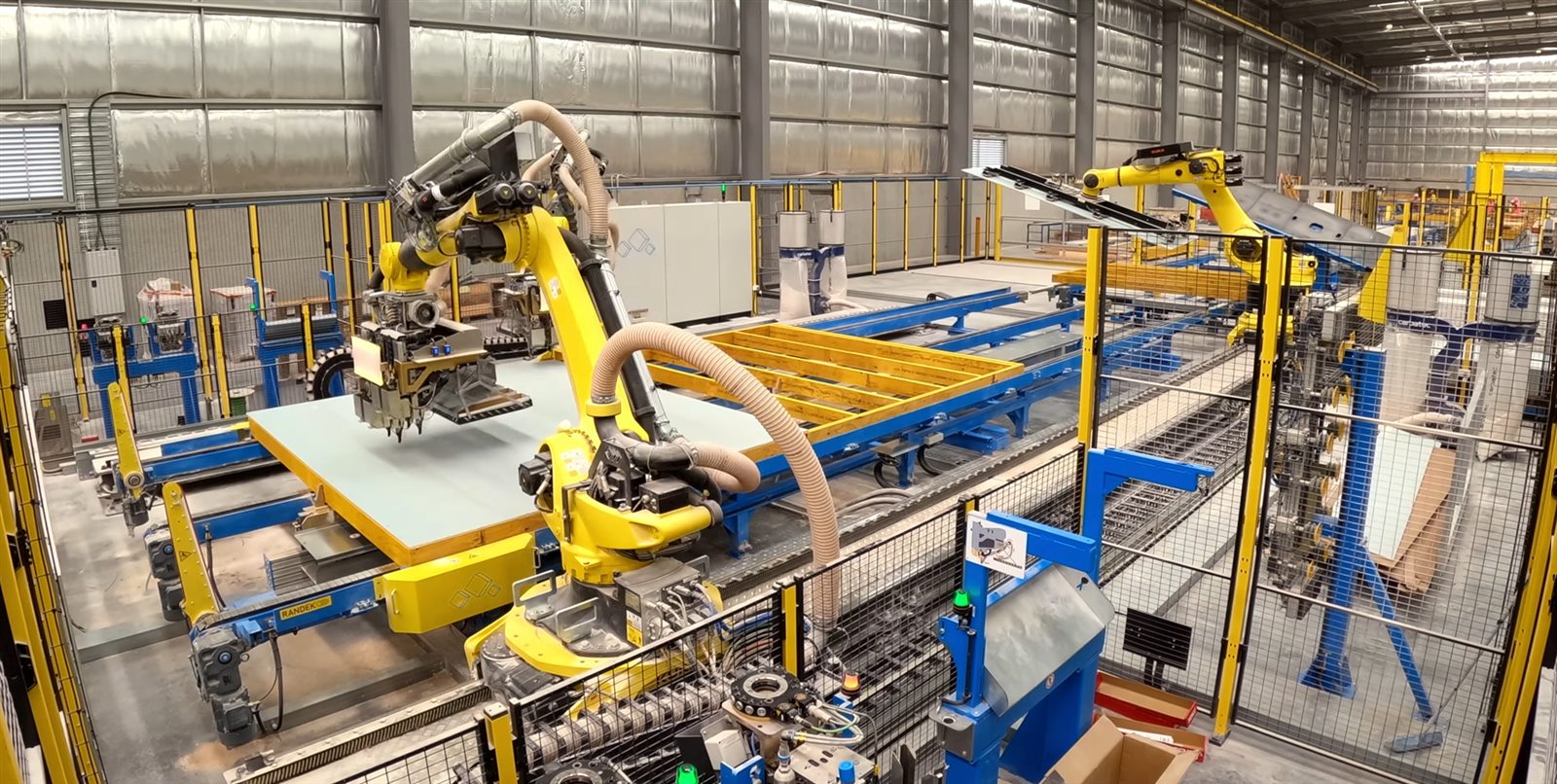
The workhorse. Compact, with room for different sheet sizes and types, and tongue-and-groove assembly.
Two robots · one workstation
Products & systems / ZeroLabor
The robots that build the building.
Randek saw early how few industrial robots the construction industry used, and how much heavy, repetitive work that left to people. In 2016 we set out to change that, and in 2017 we introduced the first ZeroLabor cell, running industrial robots at scale in an off-site factory. The cells take the physical strain out of the heaviest stations and cut the manpower they need.
A family of robotic cells that each automate one process, such as sheathing, sub-assembly or insulation. There is no ZeroLabor line of its own: you add the cells to a Randek line, or to a line you already run.
We can robotise almost every step of element production, from sub-assembly to sheathing and insulation. Each process gets its own cell, so you add the ones your line needs, one at a time, on a Randek line or on a line you already run.
A cell is customisable and fits into an existing production line, including one you already own. Start with a single cell on the station that costs you the most, a compact sheathing cell for example, and add more as volumes and confidence grow.
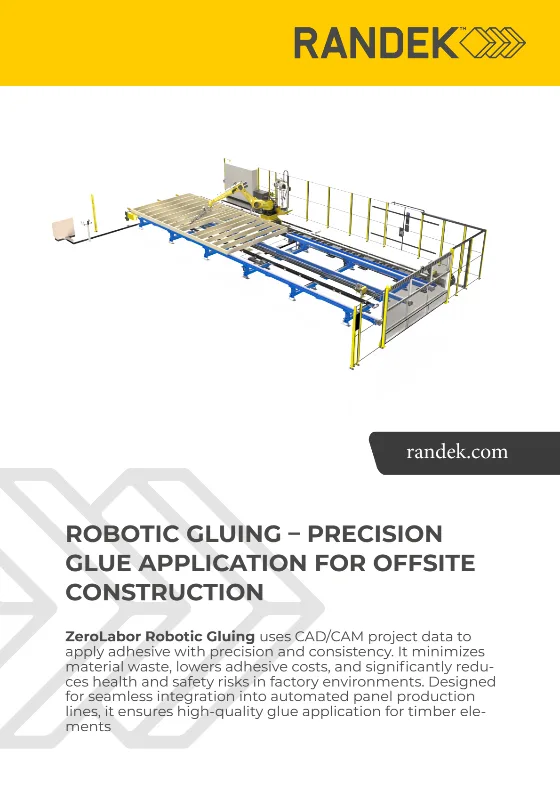
Because each ZeroLabor is a cell and not a line, you buy only the automation you need: one process now, another later, without replacing the line around it. Cells for noggin placement and gluing are available on request.
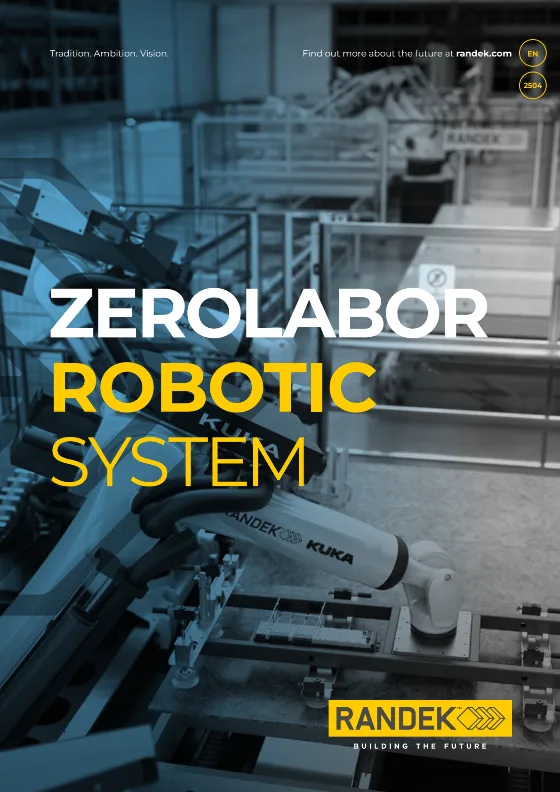 Read the brochure →
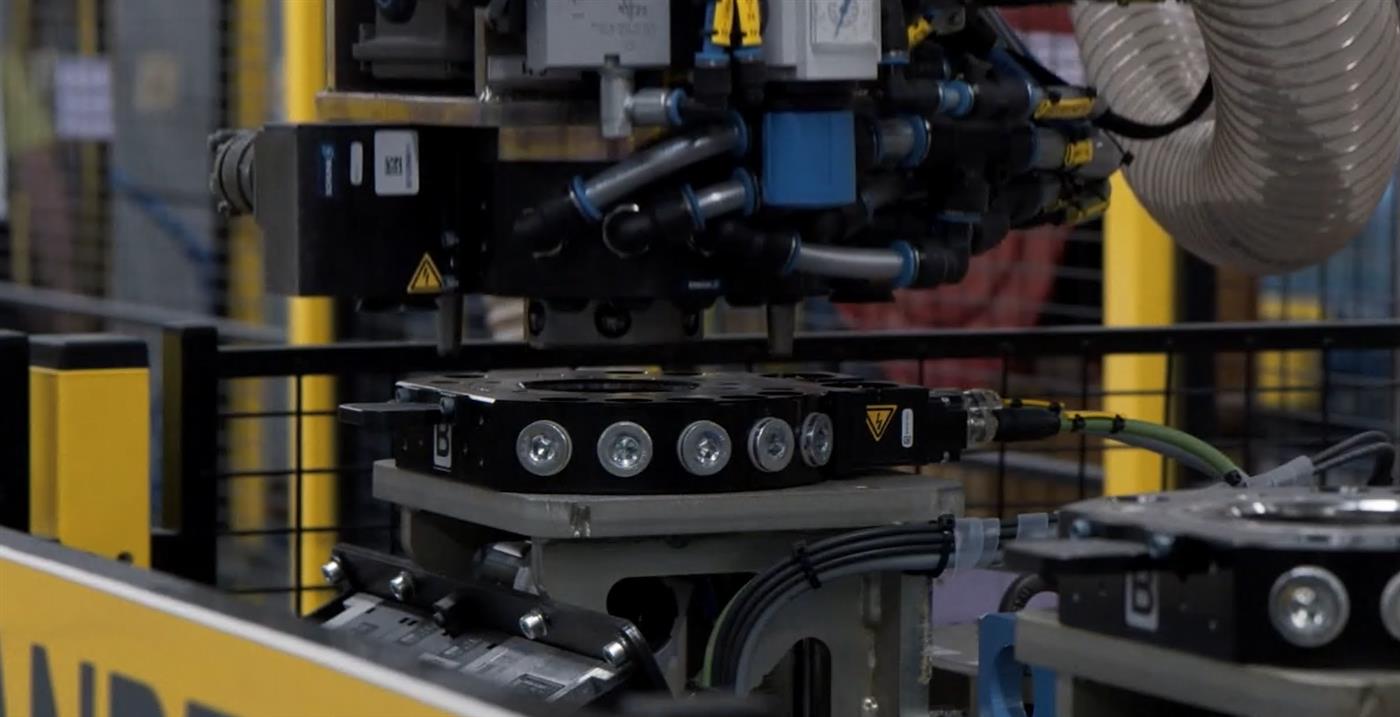
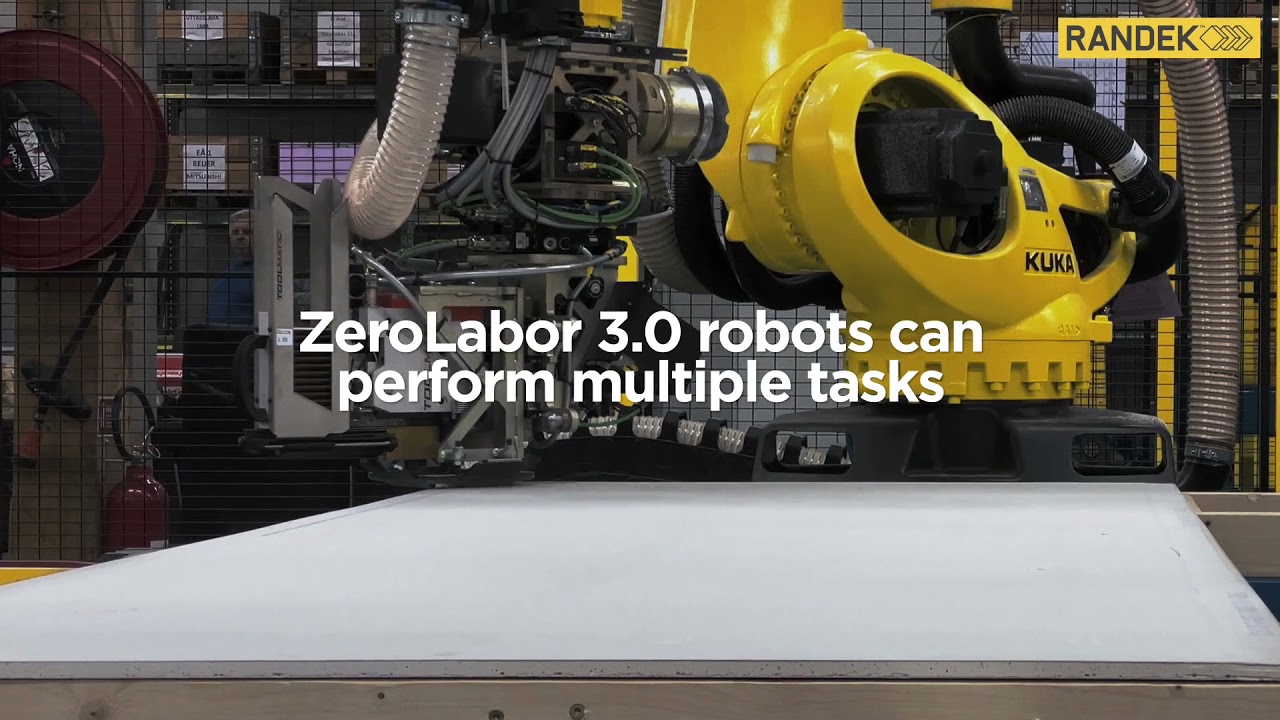
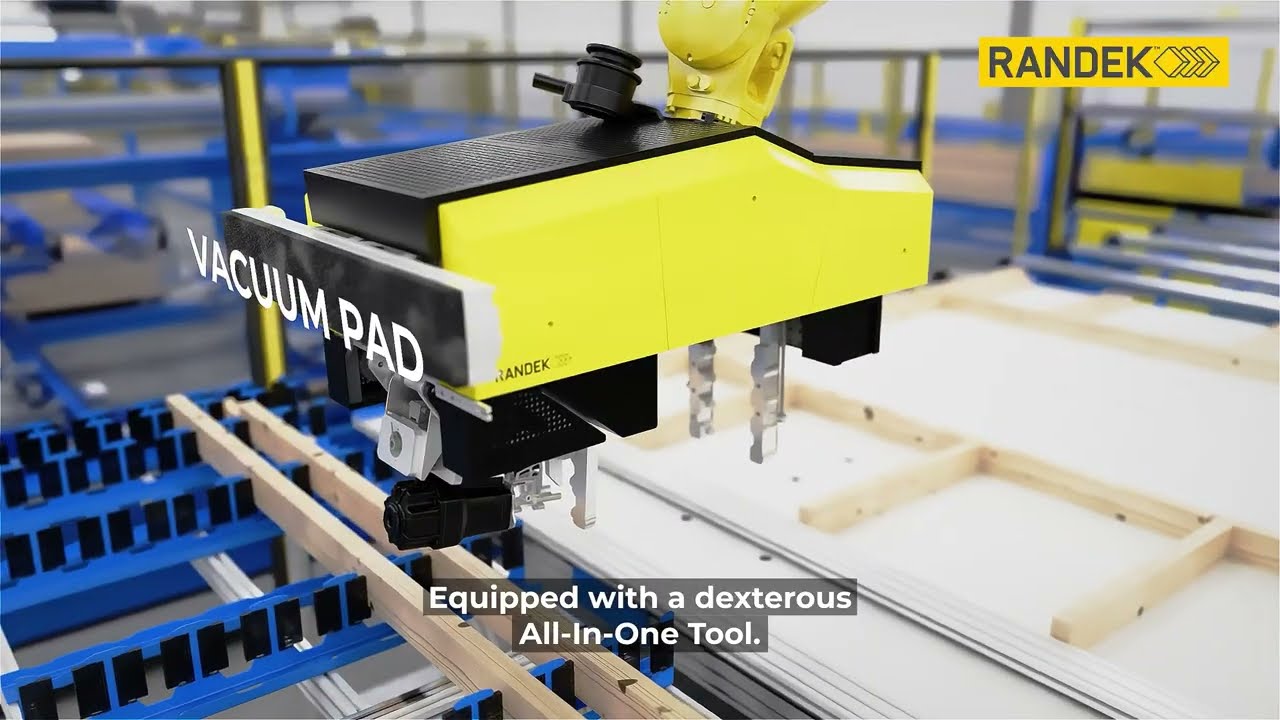
Every ZeroLabor cell is built the same way: industrial robots, a tool changer and the tools the process needs. What changes from cell to cell is the tooling, so the same robot platform sheathes a wall, fills it with insulation or builds its sub-components.
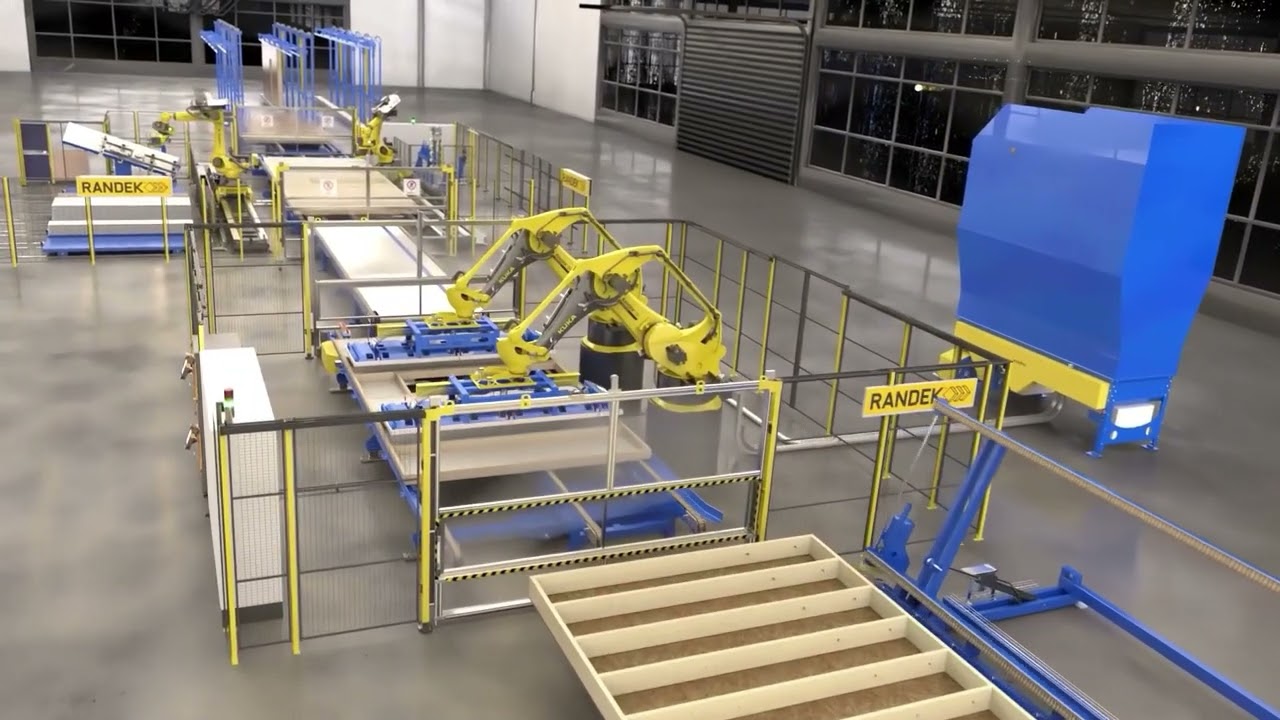
The most proven ZeroLabor cell. Robots lay the boards on the frame, fasten them and mill the openings, on one or both faces of the element, in one flow.
Several layers and sheet types go on in one pass. Recycle bins keep materials such as OSB and plasterboard apart, and a “next bigger sheet” function keeps waste down.
| Sheathing cell | |
|---|---|
| Robots | Industrial 6-axis robots on rails (2–5 depending on configuration) |
| Board types | Set up for the customer’s boards: tools and grippers are specialised per material (OSB, gypsum, gypsum fibre and more) |
Once the cell fits your factory, this is where you size it: two to five robots. Every size has the same tools, for sheathing, sawing, milling, screwing and stapling. What grows is capacity, sheet storage and the number of workstations.
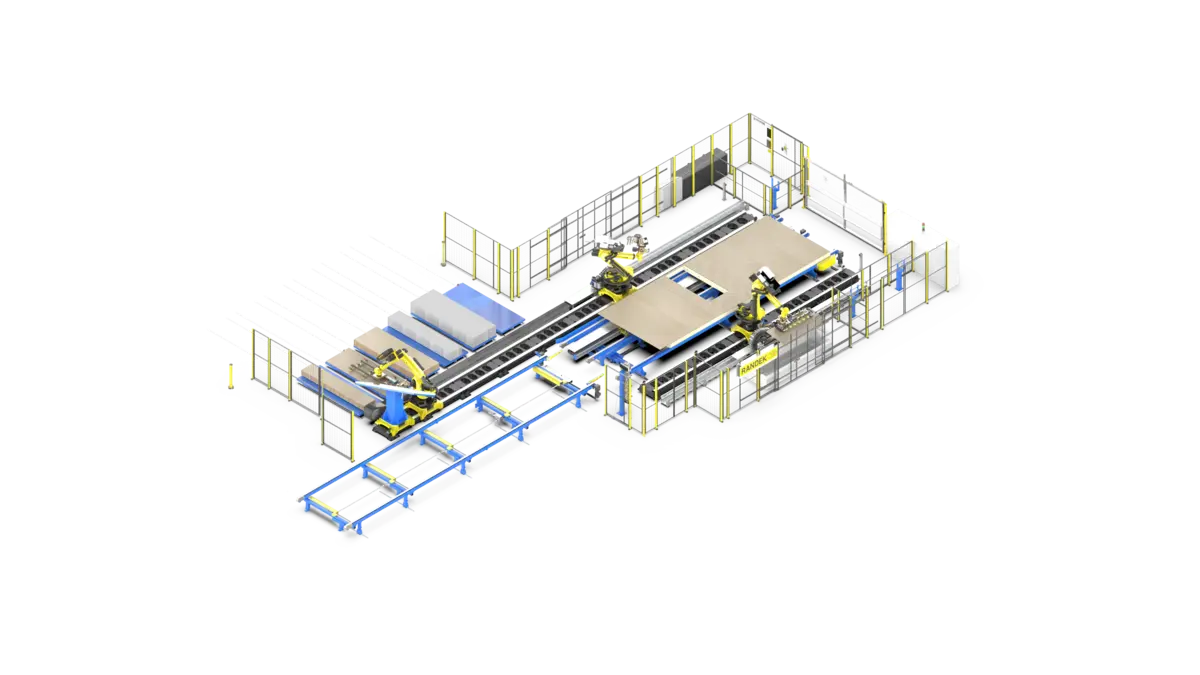
The workhorse. Compact, with room for different sheet sizes and types, and tongue-and-groove assembly.
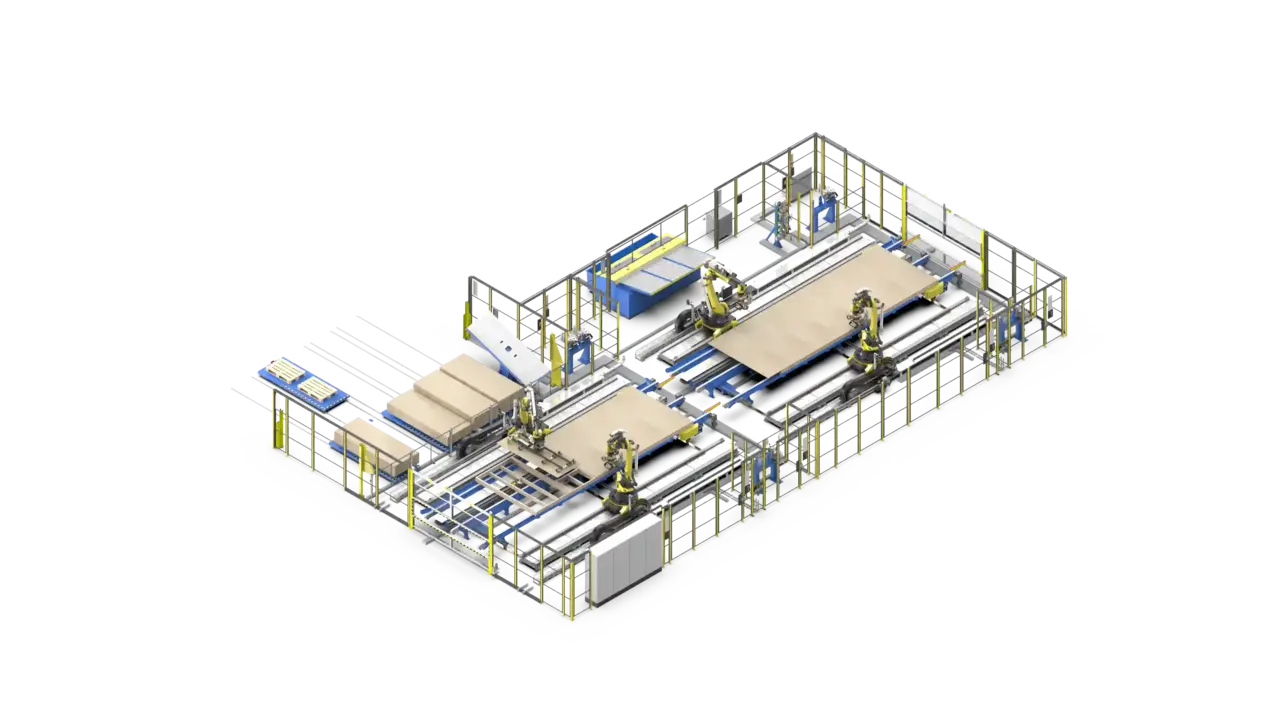
One more robot for more capacity and multiple layers, with extended sheet storage.
High single-layer capacity, with sheathing, fastening and CNC removal of recyclable material.
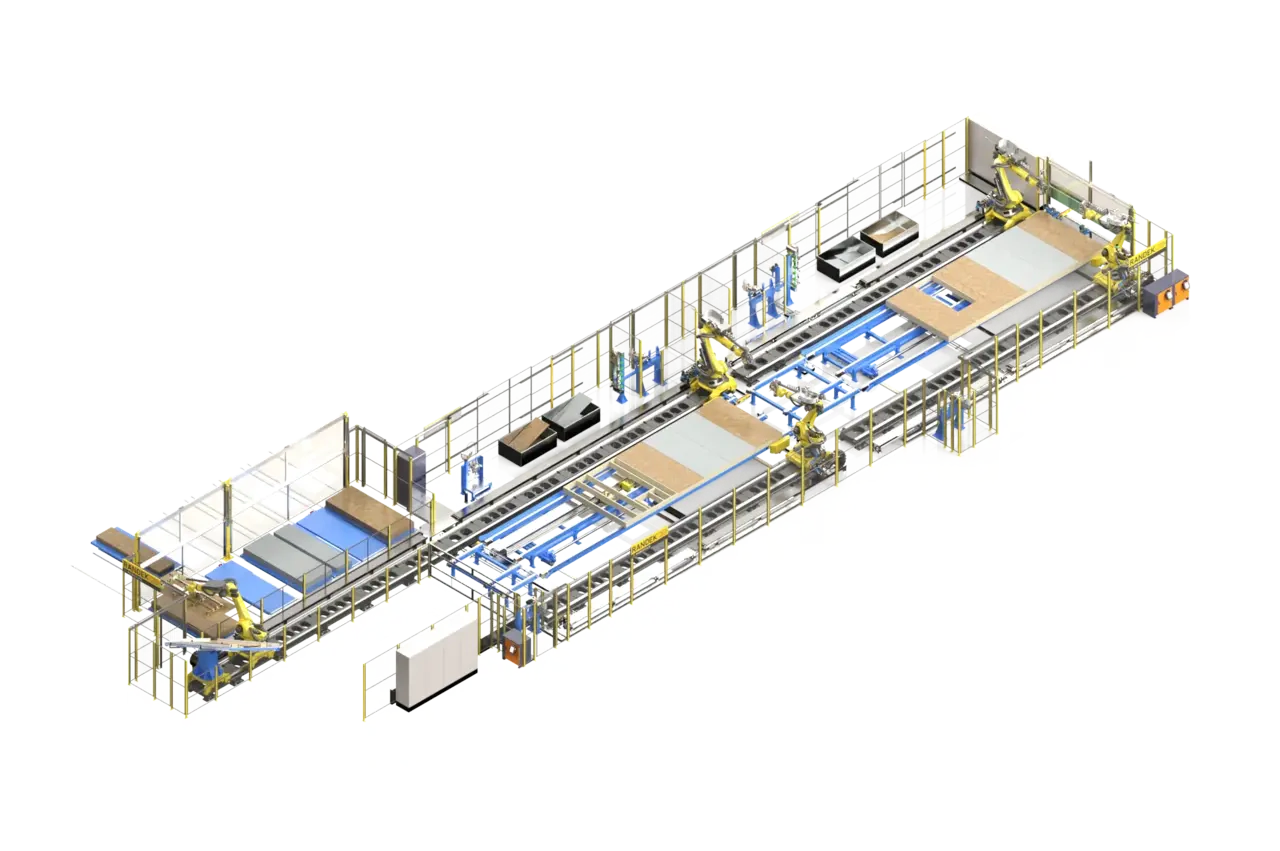
Two workstations split the work between them, for sheathing multiple layers.
| R2 | R3 | R4 | R5 | |
|---|---|---|---|---|
| Robots | Two | Three | Four | Five |
| Workstations | One | One | Two | Two, sharing the work |
| Tongue and groove | Yes | Yes | Yes | Yes |
| Sheet storage | Different sizes and types | Extended | Different sizes and types | Different sizes and types |
| Built for | A compact start, integrated into a larger line | More capacity and multiple layers | High single-layer throughput | Multiple layers |
| Example layout | Two R2 for open elements, single or double sheathing | Two R3 with Robotic Insulation for closed, insulated elements | R4 with robotic sub-assembly for open elements | With an R3 for closed elements, on AutoWall |
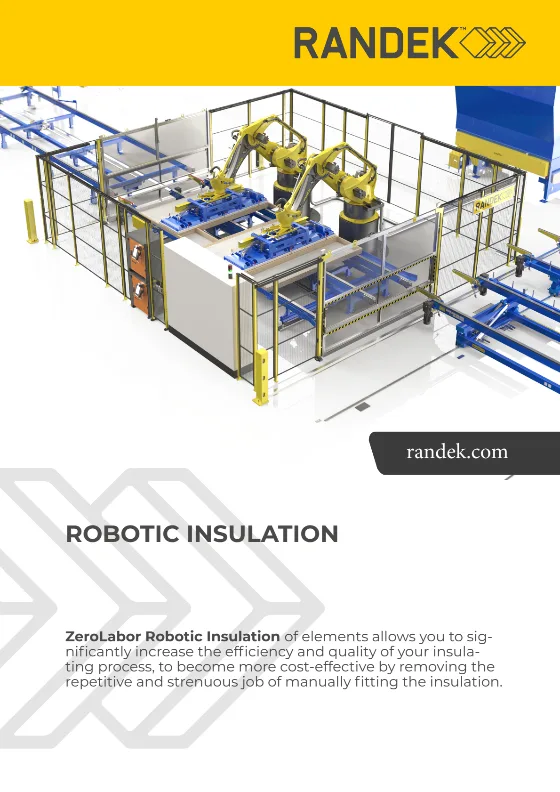
Two robots fill closed elements with blown-in insulation, to the volume and density the design data sets.
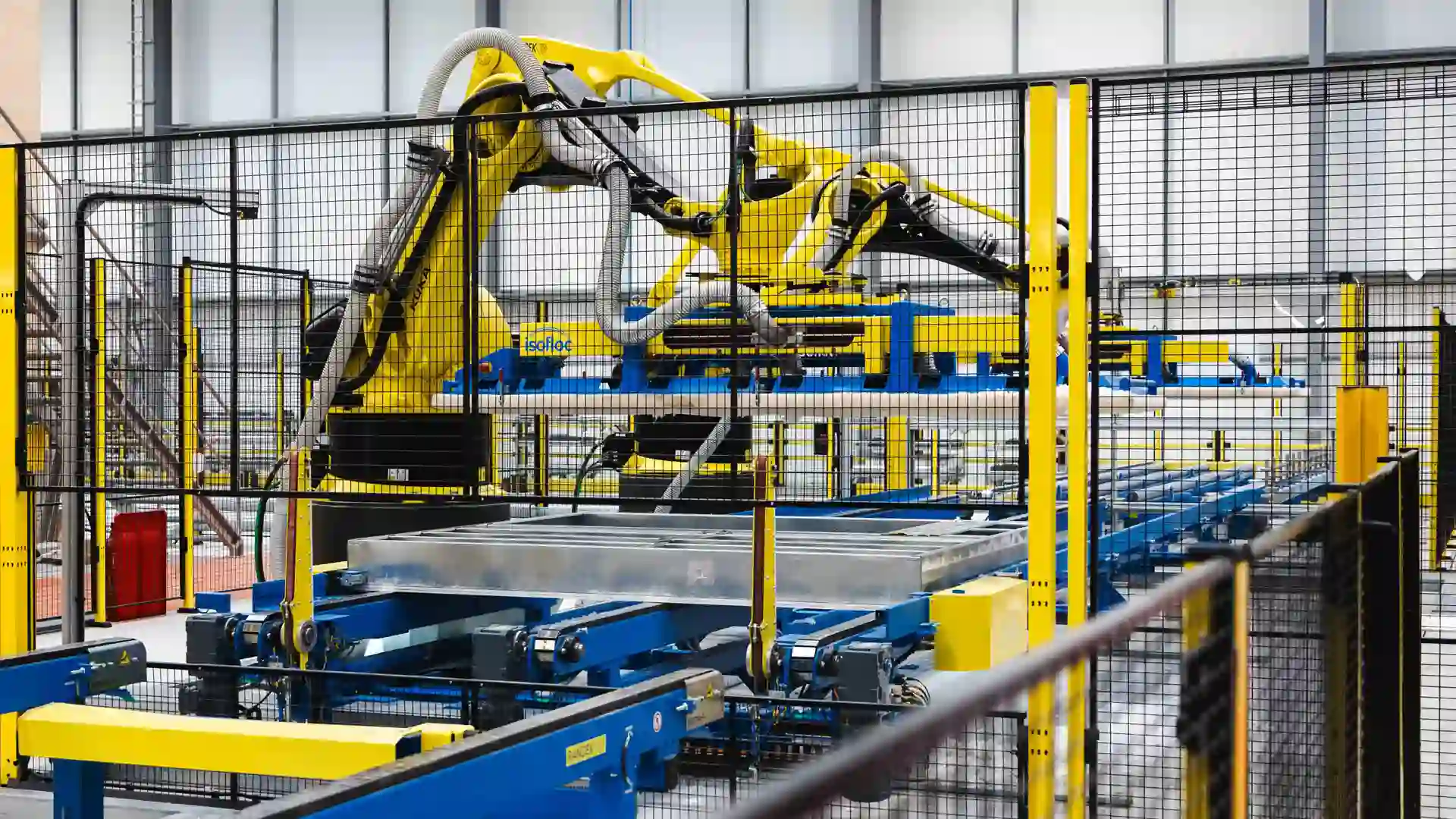
Each robot positions its blow-in plate over a cavity and fills it completely before moving on. Every fill is logged, and cavities too small to fill are flagged for manual finishing downstream. Timber and light gauge steel elements are filled alike.
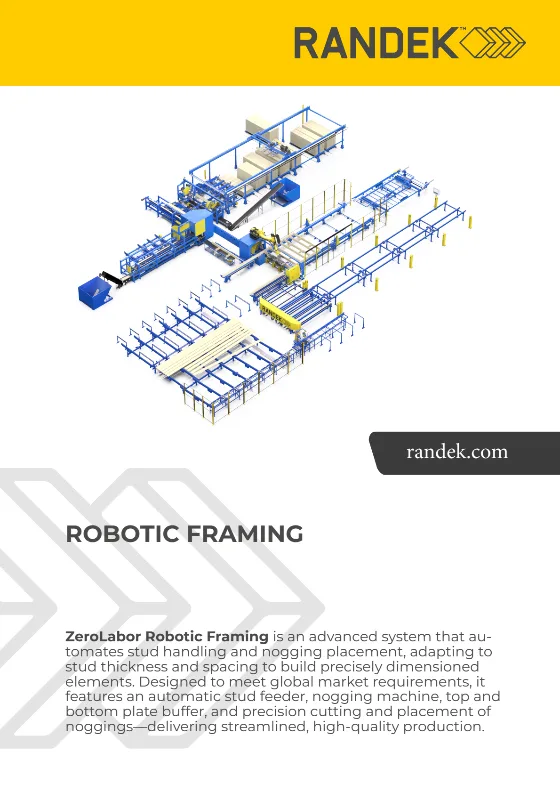
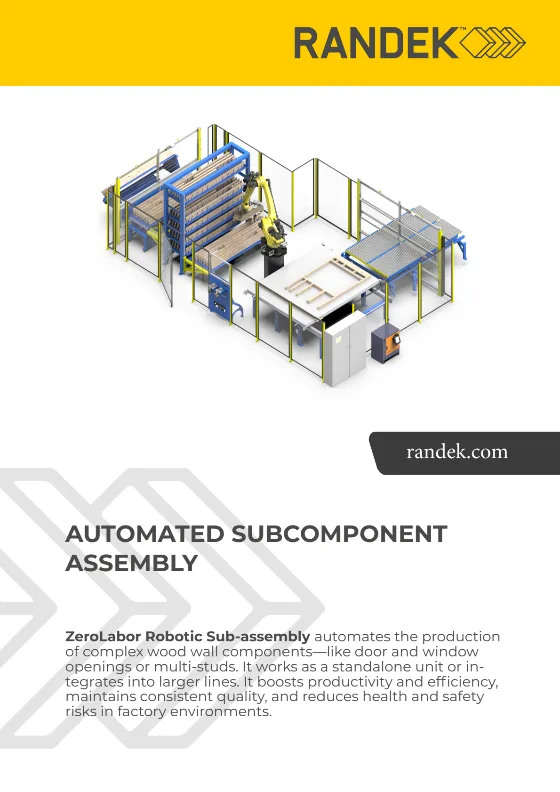
Robots build the rough openings and multi-studs that are slow to make by hand, on their own or feeding a line.
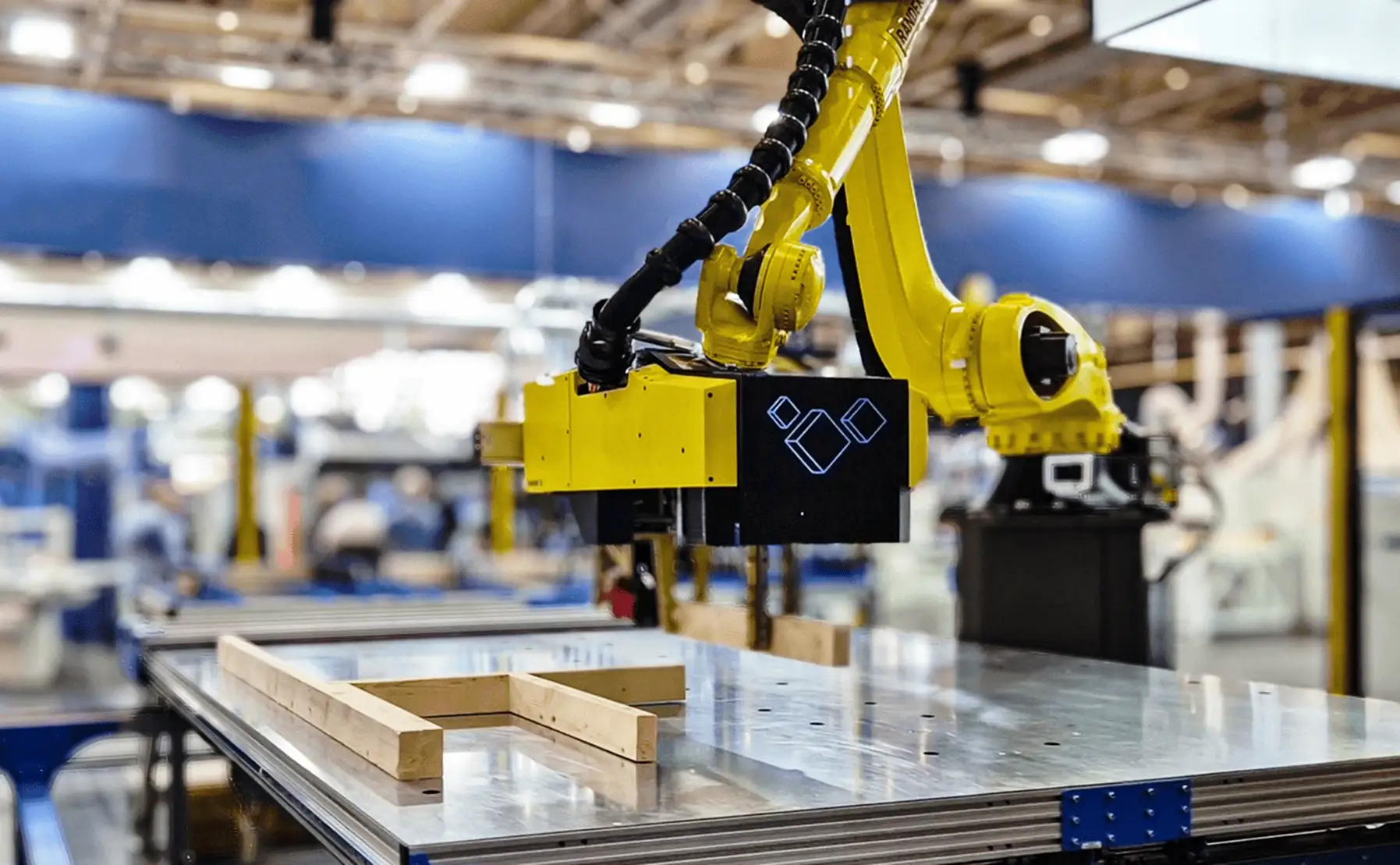
U-studs, L-studs, doubles, triples, noggings, and window and door rough openings, built the same way every time. The cell adapts to different construction standards.
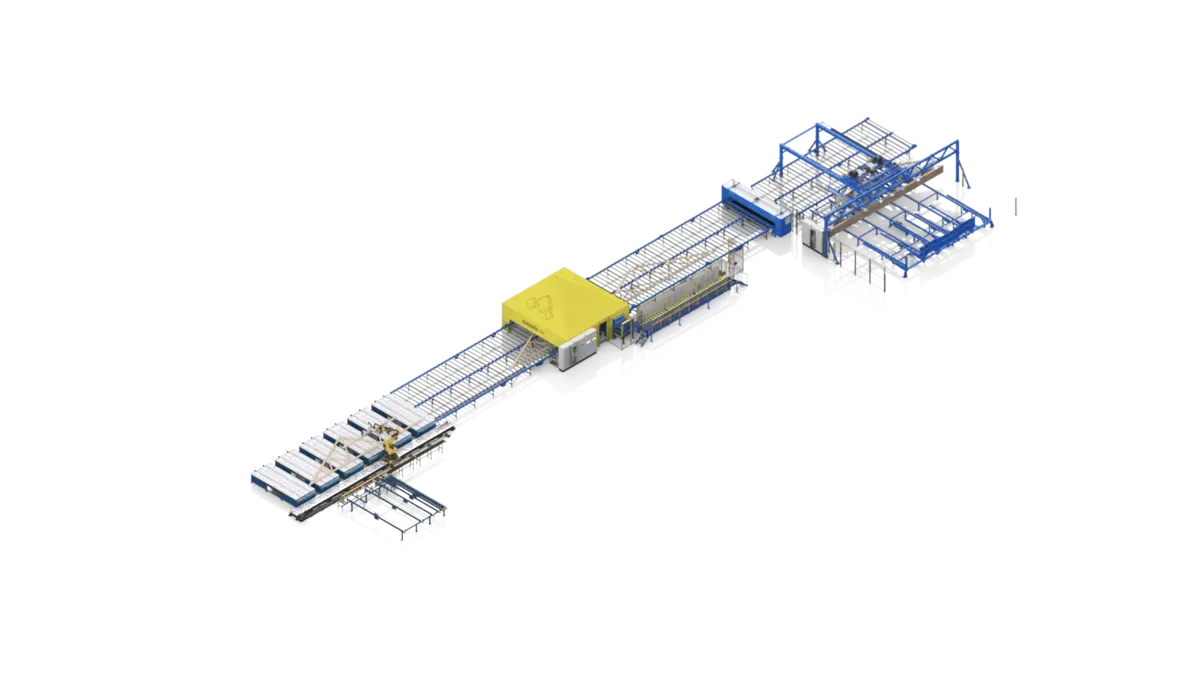
The same cells robotise different lines. Which stations they take, and how many robots, we plan with you in a pre-study.
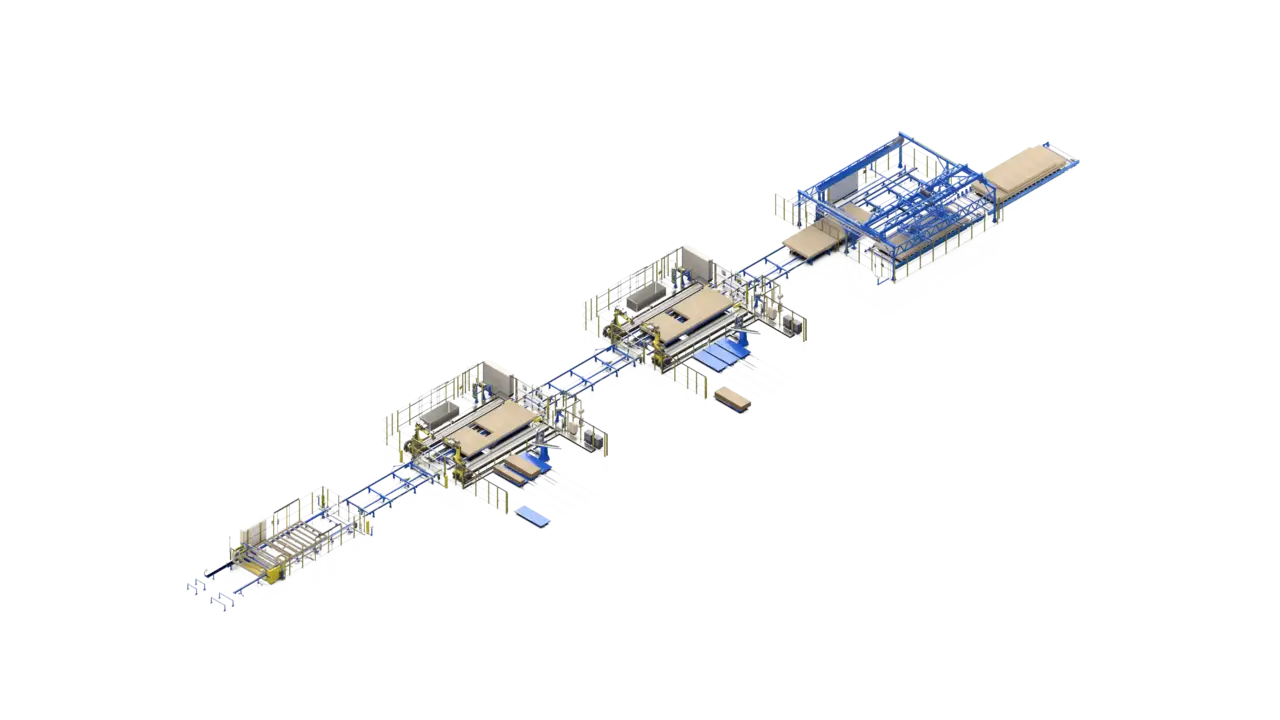
In production. On the wall line the cells take sheathing, insulation and sub-assembly, from open panels through to closed, insulated elements, whatever the mix of elements. See AutoWall →
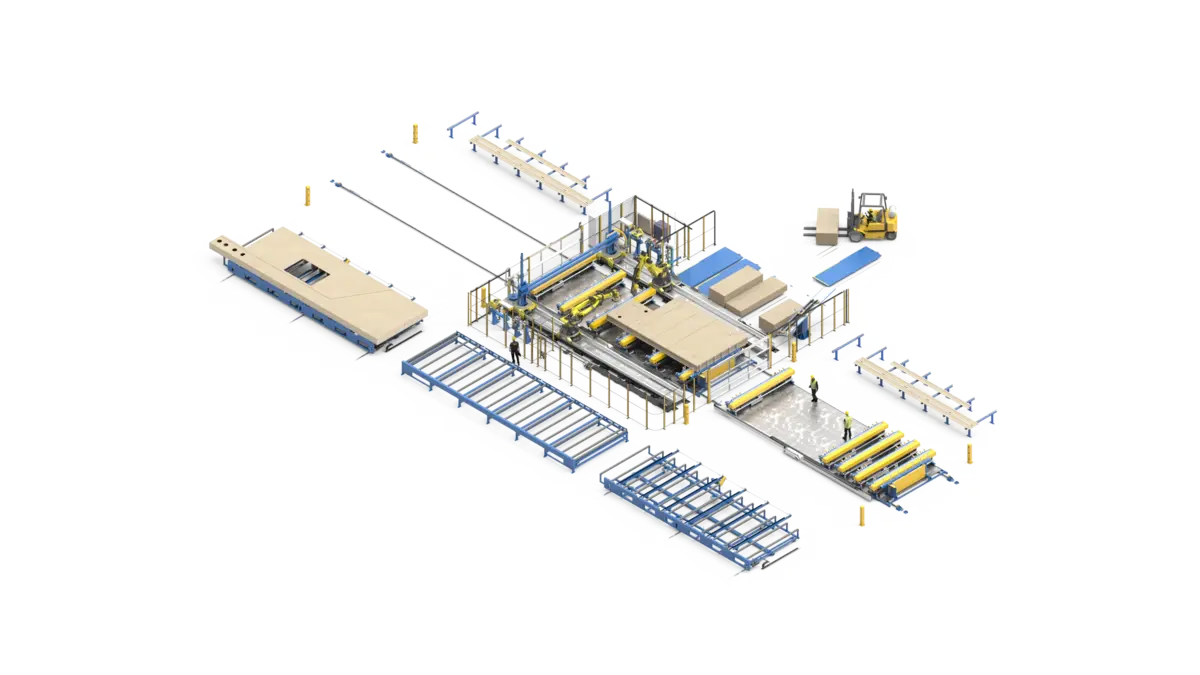
On the standard AutoFloor line two robots take the place of the portal: they place, fasten, saw and mill the sheets on floor cassettes and ceiling elements. See AutoFloor →
In development. Robotic assembly puts roof trusses together, joining a line that already presses nail plates in nine seconds. See AutoEye →
The pre-study is a service, not a sales meeting. It works out which stations are worth robotising in your factory, and how many robots they need.
A Randek project leader defines your products, KPIs, factory constraints and layout, and sets a lead time. Existing equipment is reused where it fits. Before anything is ordered.
The cell is built and verified through Factory Acceptance Testing before it ships.
Our own installation staff commission the cell, train your operators and supervise the production start. MyRandek tracks the KPIs from then on.
“They didn’t just provide automation; they co-developed a process that works in a real-world, high-volume factory.”
“We’ve been operating the robot line now for two years, but it’s been a seven-year journey. We’re still improving, but every day of the week and every week of the year we’re getting more efficient.”
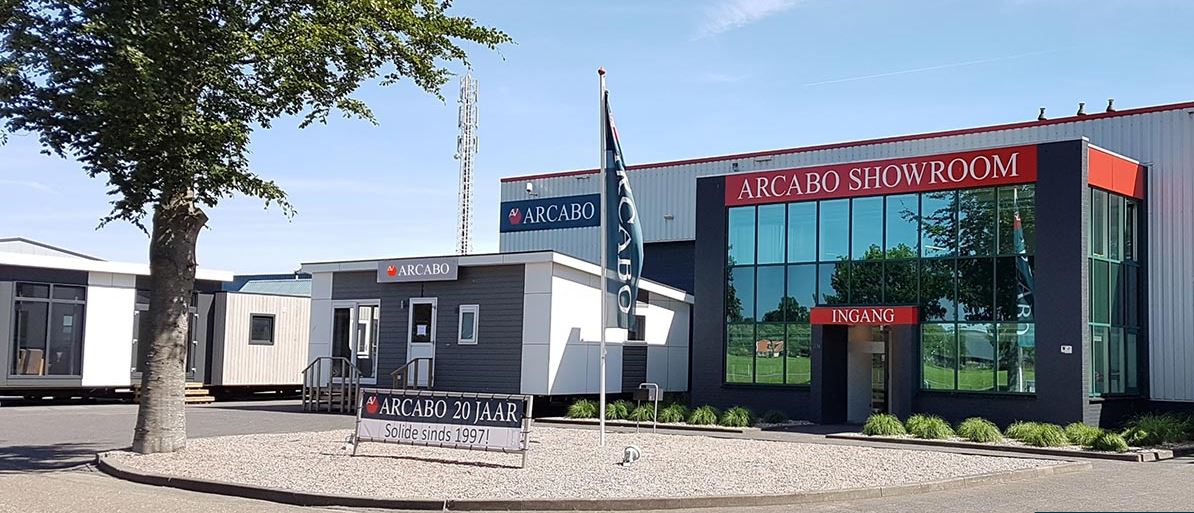
At our state-of-the-art factory, we construct our modular recreation homes with efficiency in mind. This not only minimizes transportation needs but also ensures a superior working…
Read the full story →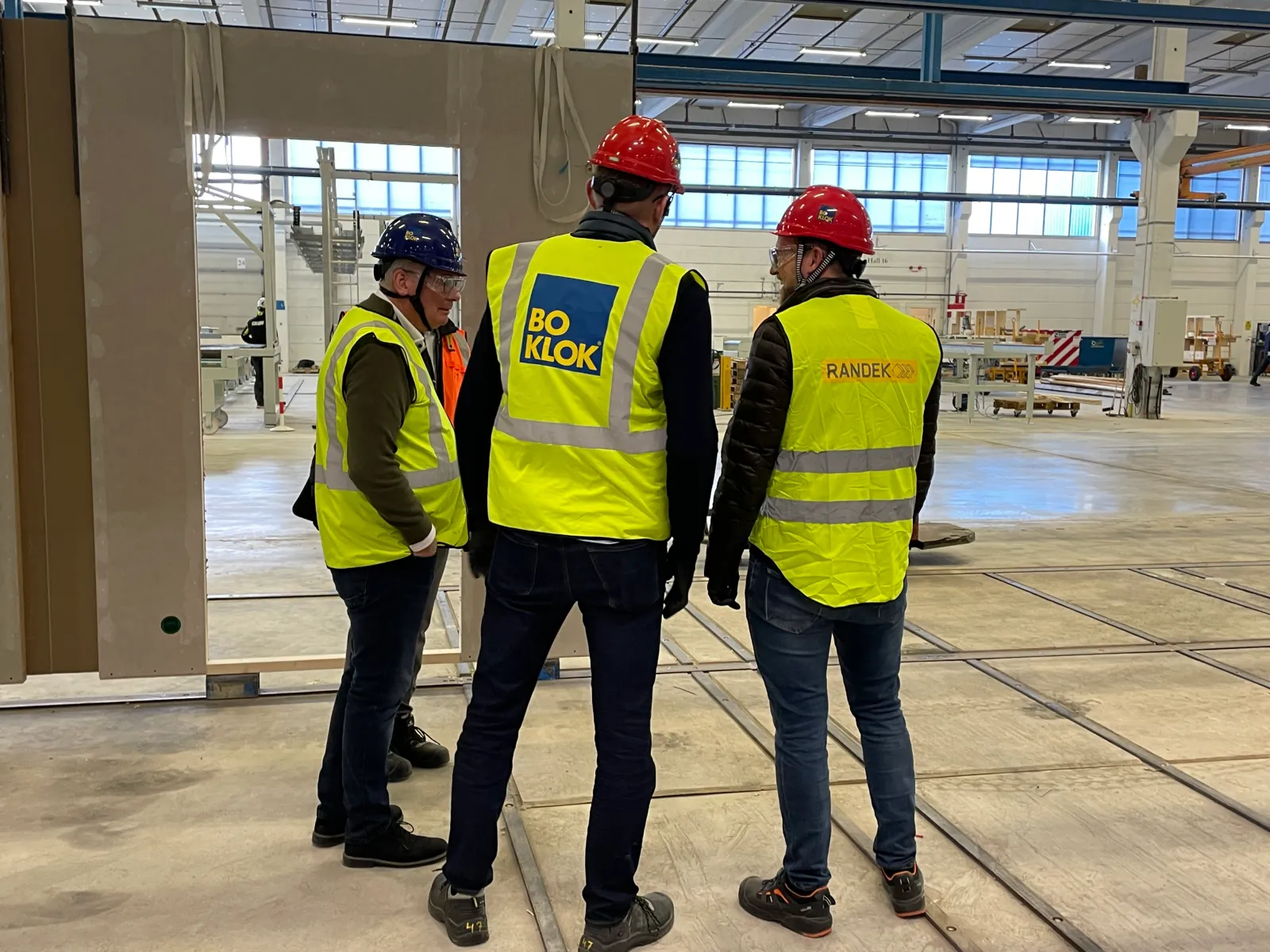
“Randek is an important supplier for us. Our new production line will enable us to double the production rate and we will be able to produce our new multifamily type of houses faster.”
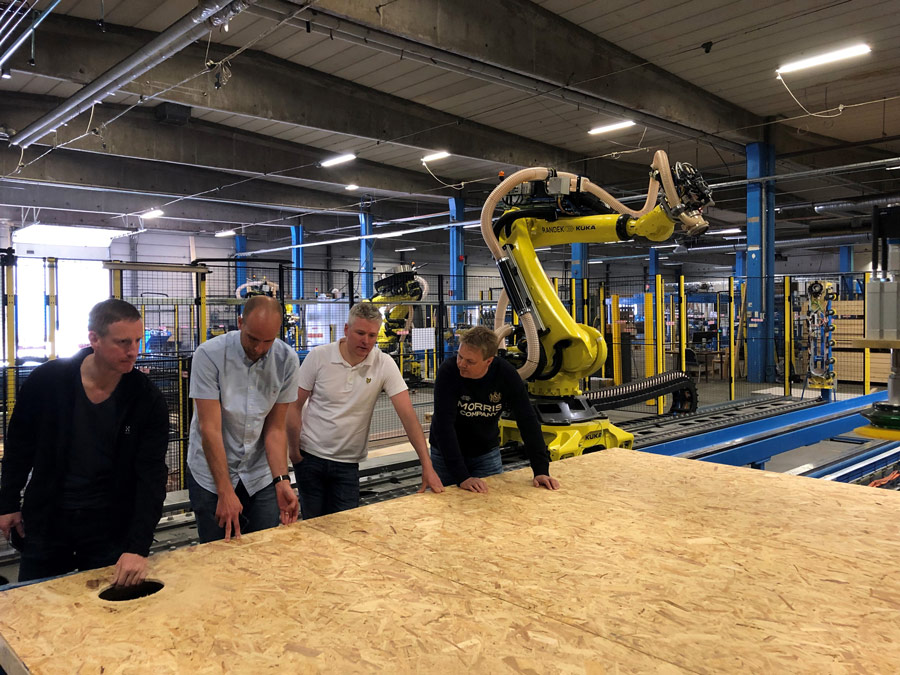
Randek has been very responsive to our expectations and we received a final tender that was within the technical specifications and our budget. At Trivselhus we work in project groups. All…
Read the full story →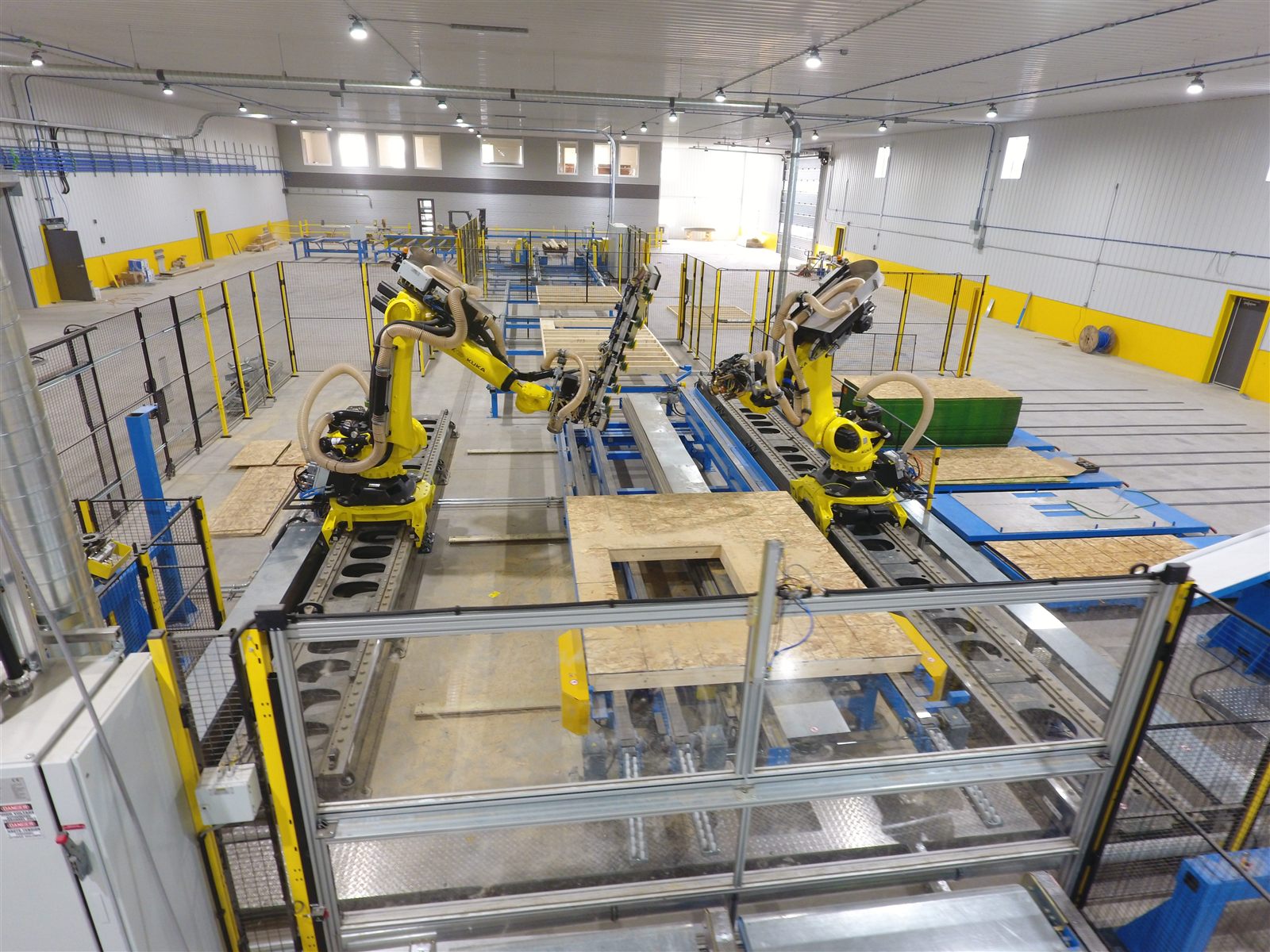
“As Canada’s first supplier of components to the housing industry, Riverbend chose a ZeroLabor robotic wall manufacturing system — reaching a higher level of productivity and precision.”
“Our original site in Westhill, Scotland, has had Randek framers for over 30 years. We were probably one of the earliest Randek customers in the UK.”
“We’re always looking for ways to do better. And Randek’s been a big part of that journey.”
Tell us what you build today and where the bottleneck is. We will point you to the right team: locally where we have one, from Sweden where we do not.
We use analytics cookies to understand how the site is used. They are only set if you accept. Privacy policy