
Systems / Startup Factory

Startup Factory

The right first machines, chosen with you.

You do not need a full line to produce elements industrially. Tell us what you build, and Randek helps you pick the saw, tables and handling that fit your product, your floor and your budget. Everything you start with keeps its place when you add automation later.

Webinar

The Startup Factory concept, explained

A recorded webinar on how a house factory can start: the machines, the first elements and the steps toward automation.

How we help you choose

From what you build to your first element

Most factories come to us with a product and a building, not a machine list. That is the right way round. The machines follow from what you build.

1

Tell us what you build

Walls, floors, roof trusses or a mix. Element sizes, materials and the volumes you plan for the first years.

2

Pre-study

A Randek project leader looks at your building, your crew and your budget, and at where you want to be in five years.

3

Machine list and layout

A proposal for the first machines and how they sit on your floor, with room left for the next step.

4

Installation and training

Randek installs the machines with its own staff and trains your team, so the first elements come off the tables with support at hand.

Choose by what you build

The machines behind each element

Every element starts at the saw. What follows depends on what you build. This is where most entry factories begin, and why.

What decides the choice
What you buildElement types, sizes and materials set the saw and the tables.
How manyElements per week decide how many tables and how much handling.
Your floorLength, width, doors and crane height set the layout.
Your crewThe people you have today, and the people you can hire.
What comes nextThe layout leaves room for the step after this one.
Examples

Three examples to start from

Examples, not fixed packages. Your pre-study decides the real mix, and each one is built to be extended rather than replaced.

Getting started

A BS10 upriser table and an SP722 cut saw. The smallest way into industrial element production.

The entry point

Next step

BS20 butterfly tables, an SP722 cut saw, a JS400C notching saw and wagons to move material and finished elements.

A broader base

Make it all

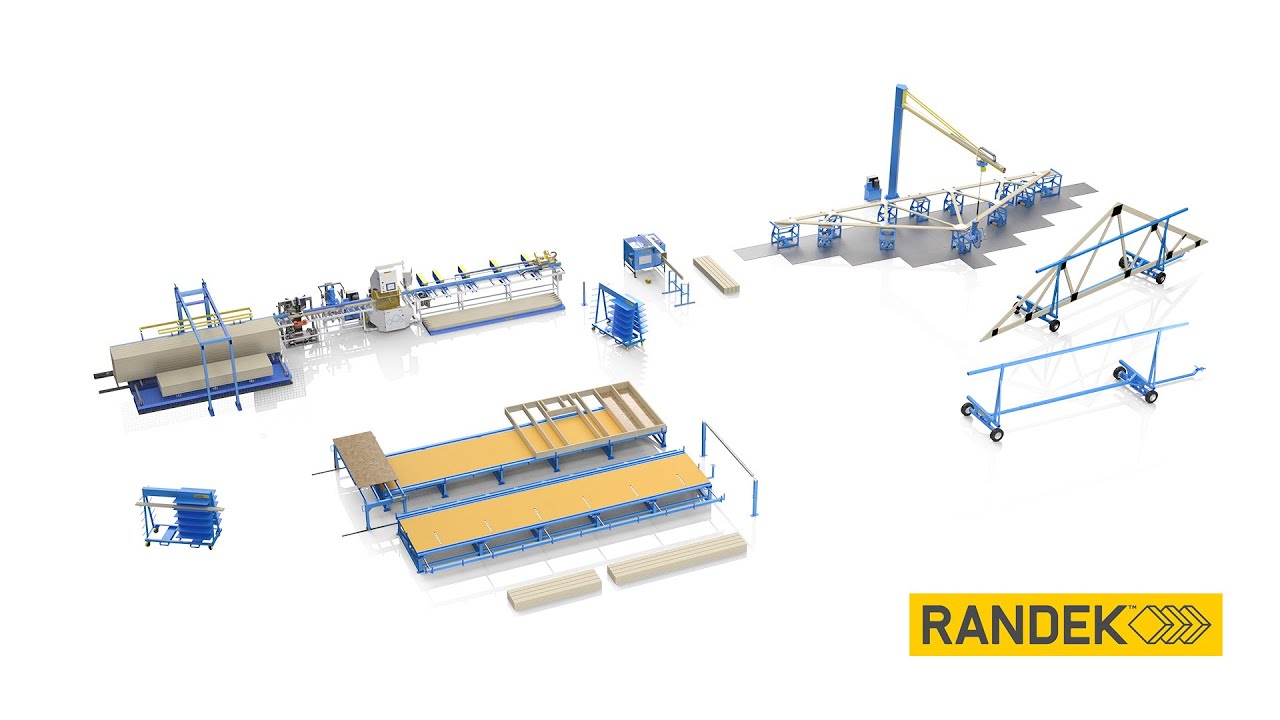
A four-table butterfly line, an SPL728 saw with full compound cutting so no cut is out of reach, a JS400C notching saw, a Randek Truss System NT and wagons. Walls, floors and roof trusses from one factory.

Every element
The next step

More automation, one step at a time

When the volume grows, you do not start over. You add a semi-automatic line next to the machines you already run, and take the next step when it pays.

  1. 1 Entry machines Startup Factory Saws, tables and handling. You start here
  2. 2 Semi-automatic EasyWall and EasyFloor EasyWallEasyFloor
  3. 3 CAD/CAM lines AutoWall, AutoFloor, AutoEye AutoWall SystemAutoFloor SystemAutoEye System
  4. 4 Robotics ZeroLabor Robotic cells, added one process at a time. ZeroLabor
What comes with you
  • Every entry machine keeps its place when you extend the line
  • Your saw keeps cutting for the new stations
  • Your team already knows how the elements are built
  • The pre-study leaves room on the floor for the next step
The machines to start with

Everything an entry factory needs

The saws, tables and stations most factories begin with, the semi-automatic lines to step up to, and the handling that ties them together. Follow any of them through to the product.

Saws

  • SP720 Series Cut Saws Randek’s crosscut saw platform: angled and inclined cuts in one machine, computer-controlled length stops, and up to three board layers per cut.
  • JS400C Notching Saw A dedicated notching saw: two blades, one horizontal and one vertical, cut the notches and recesses timber framing needs.

Tables

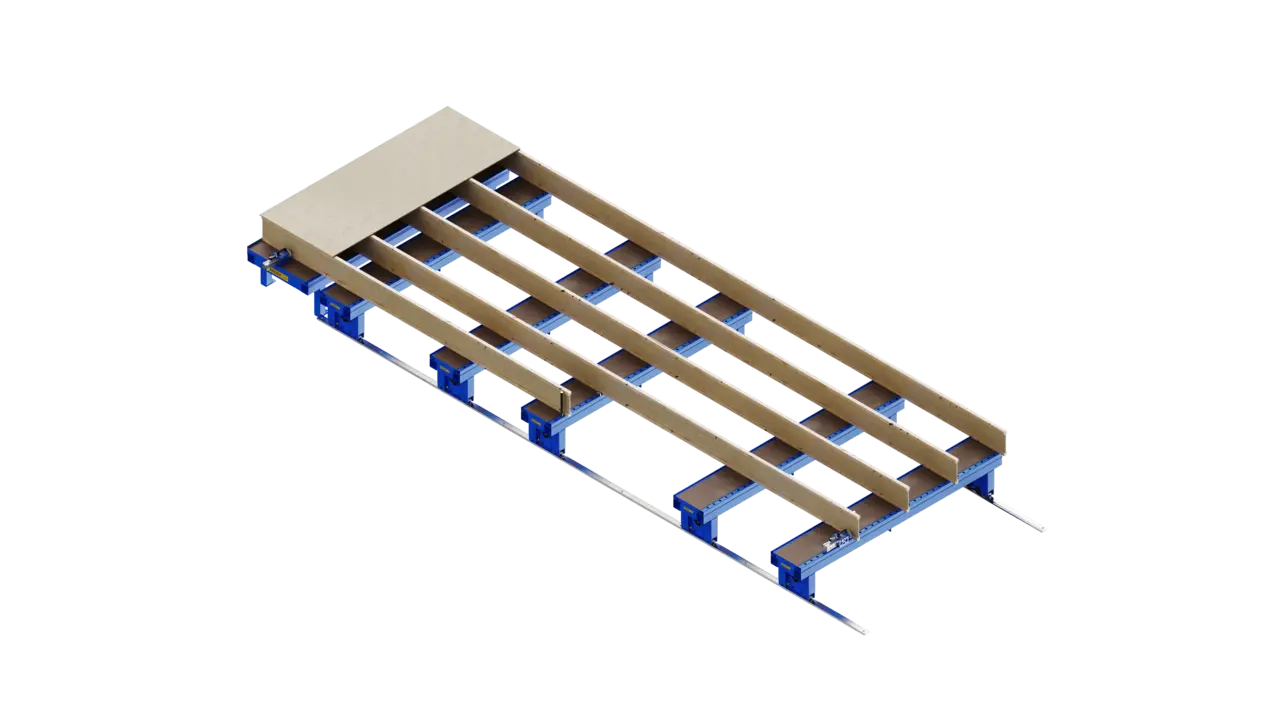
  • Butterfly Tables Working, raising and turning tables (the BS series) for wall and floor elements. One table to start, two to turn, three or four to make a line.
  • Gable End Table A working table for gable end elements: pneumatic clamping holds a straight base while frame, sheathing and cladding all go on at one station.
  • Floor Jig Tables One fixed table as a square 90° reference, plus movable tables you position exactly where the floor element needs support.

Roof trusses

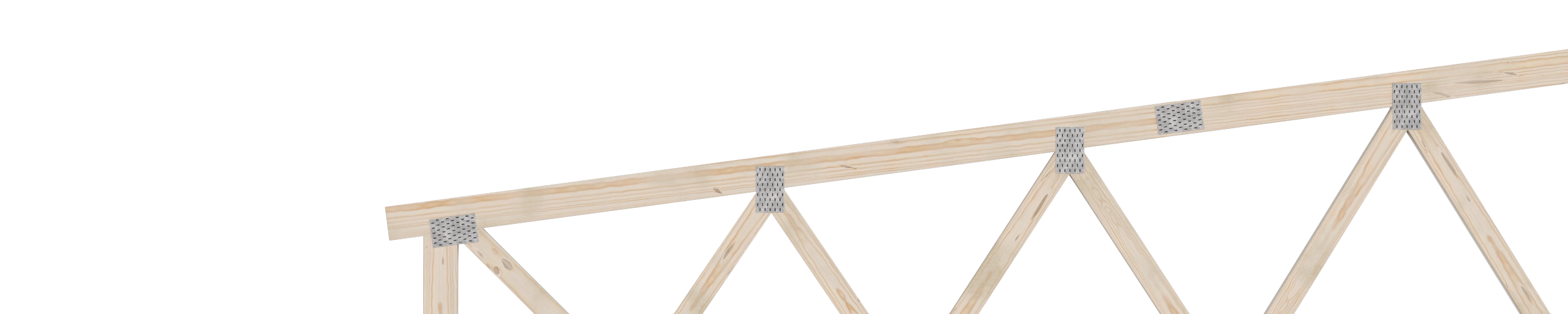
  • Randek Truss System NT Randek’s equipment for traditional roof-truss manufacturing: C-press heads from 23 to 50 tonnes (metric, 225–490 kN) on a crane, magnetic fixtures on a steel floor and LAP CAD-PRO laser projection.

Step up to semi-automatic

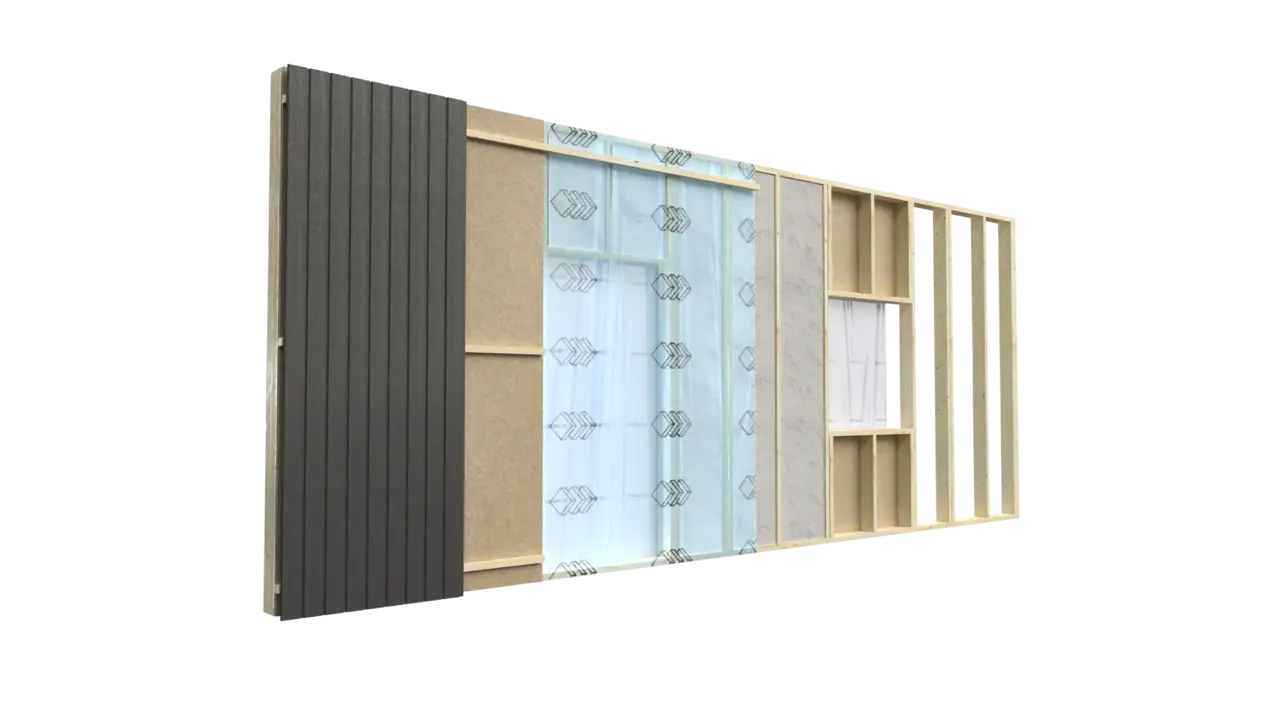
  • EasyWall A modular wall line for frames, open, closed and mixed panels in timber or light gauge steel: the operator places the studs and boards, the framing station and the Bridge RB2 do the fastening.
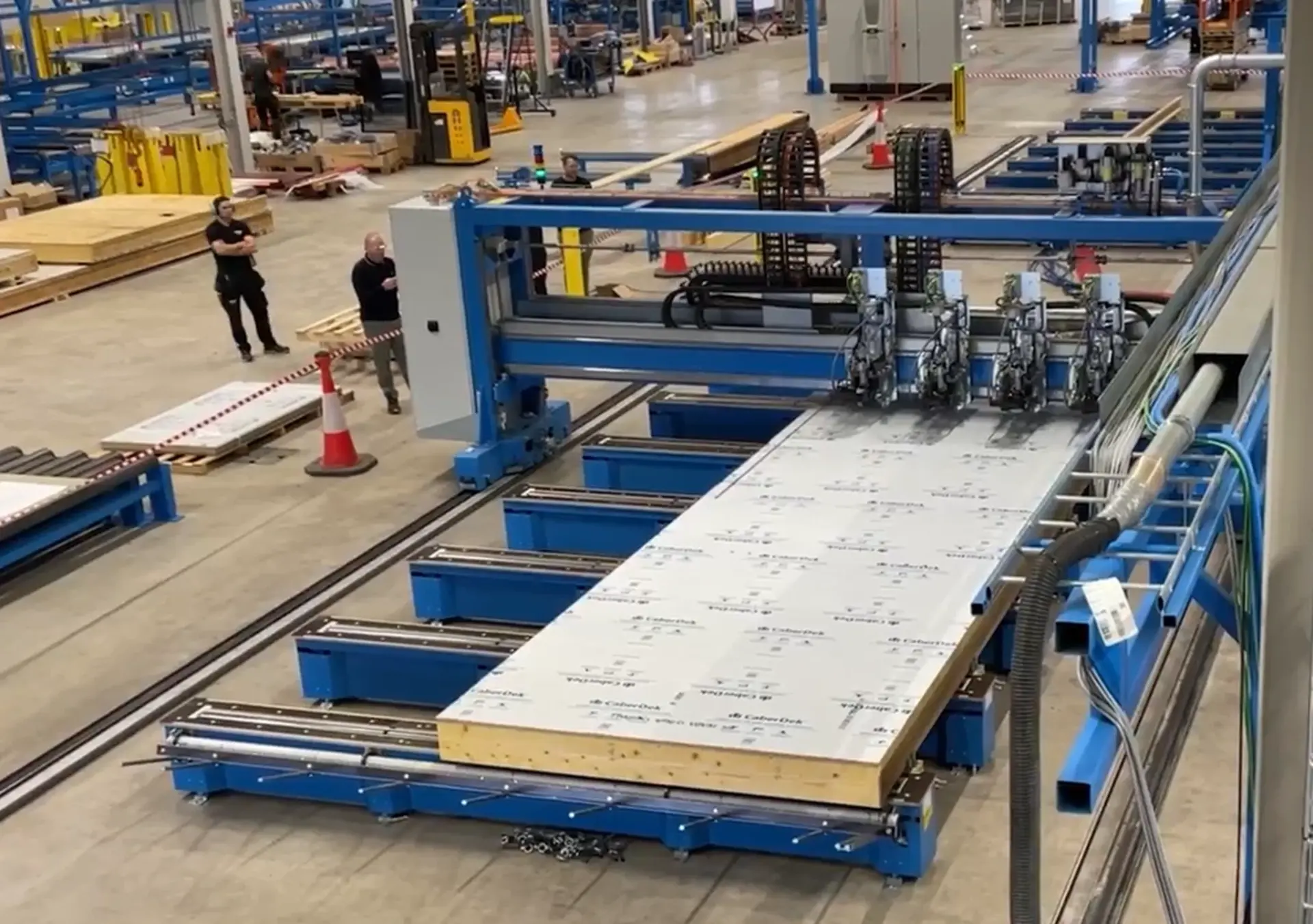
  • EasyFloor A semi-automatic production line for floor elements with timber or steel joists, driven from your design data and built from modular areas.

Handling and accessories

  • Light Material Wagon A material trolley with twelve tilted shelves that keeps timber sorted and within reach at the workstation.
  • Roof Truss Wagon A heavy-duty forklift-towed trolley that stacks finished trusses at a stable angle, with length adjustable in 500 mm steps.
  • Roller on Stand A height-adjustable roller support, bolted to the floor, that keeps wall and floor elements moving between tables and stations.
  • Board Vacuum Lift An ergonomic vacuum lifter with its own column jib crane: one operator handles full-size sheathing boards that would otherwise need two.
Questions

Before you start

Can I start with a single machine?

Yes. Many factories start with a saw or a set of tables. Every machine works on its own and keeps its place when you add more.

How long does it take to get going?

Individual machines ship in a few months. A complete line takes longer. Both start with a pre-study of what you build.

Is Startup Factory for timber or steel?

Startup Factory is built for timber. For light gauge steel, Randek has the LGS framing station and AutoWall with LGS framing.

When is it time for EasyWall or EasyFloor?

When the tables are full and the order book keeps growing. The pre-study shows where the next step pays, and the machines you run today stay part of the factory. See the next step.

Can I buy used machines?

Sometimes. Randek sells second-hand machinery when it becomes available. See what is available now.

Your next factory starts here

Talk to Randek

Tell us what you build today and where the bottleneck is. We will point you to the right team: locally where we have one, from Sweden where we do not.

Talk to your team