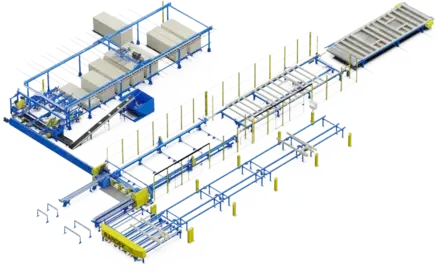
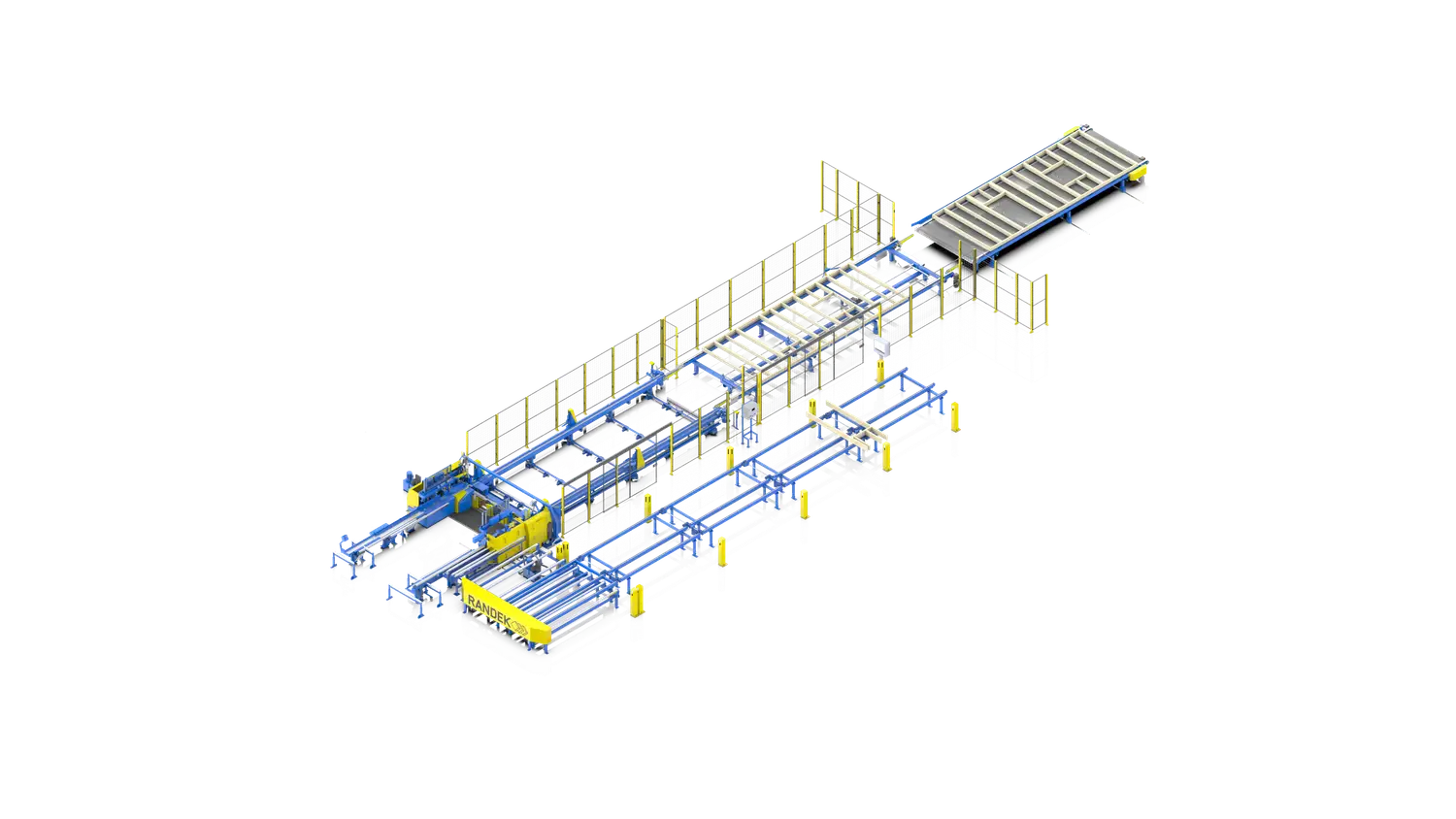
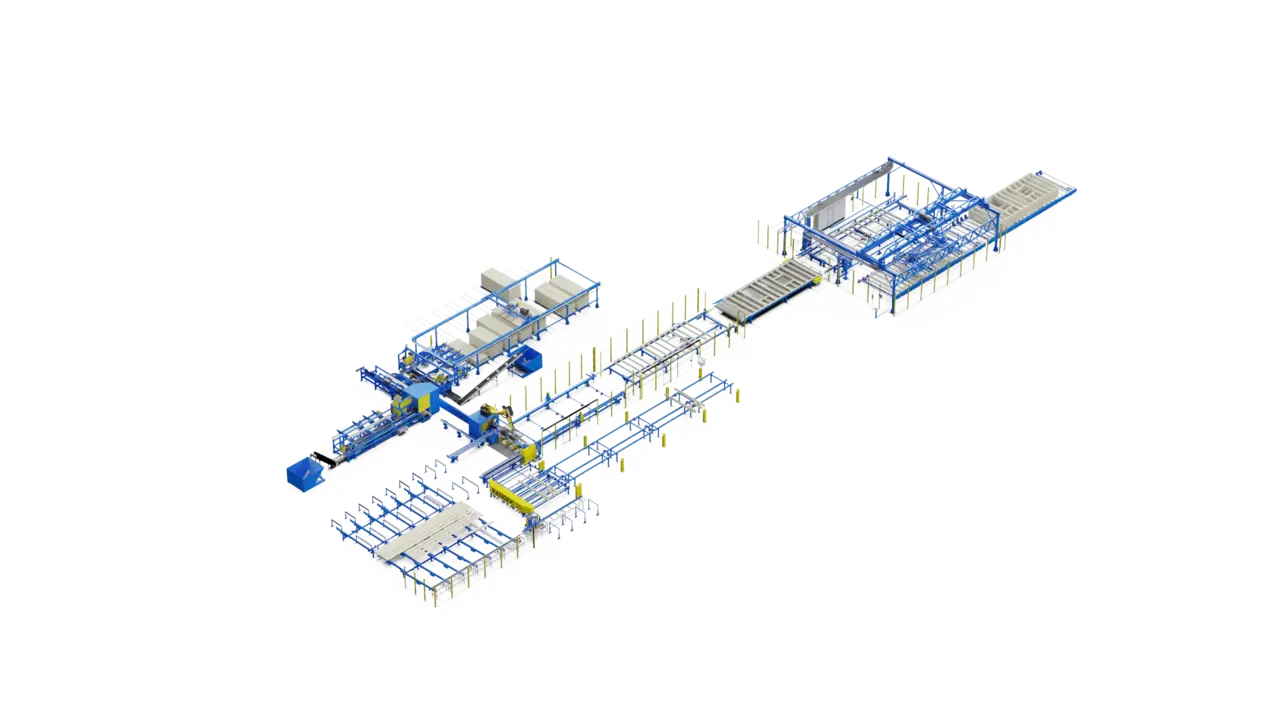
AutoWall Frame can be outfitted with all the most advanced wall frame building technology, with several options to meet your production capacity and your facility. Depending on the manufacturing footprint and the intended output, it can be optimised and configured in a variety of ways.
The AutoWall framing station, with automatic stud feeder.
What the line does
The frame, built to the drawing — and squared before it leaves.
The frame can be assembled in numerous ways using the framing machine and its supplementary features. How the incoming material flow is split into multiple streams is determined by the output you want — which is why the framing area is configured to the factory rather than the reverse.
Studs, plates and noggins positioned and fastened from CAD data
Noggins cut to the actual distance between the studs, so deviations in stud thickness do not carry into the element dimension
Stud feeder handling packages straight off the trolley
Squaring and holding functions before the element leaves the station
Example layouts
Three ways to build an AutoWall Frame line
The same framing platform, from a compact automated frame to a robotic sub-assembly cell. Where you start depends on your output and your factory footprint — and each step is designed to extend into the next.
Framing station with stud feeder
The core automated frame: studs, plates and noggins positioned and fastened from CAD data.
Framing machine with industrial nail guns and squaring
Stud feeder handling packages straight off the trolley
Crown check flips every stud so the crown always faces the same way
Frame line with stacking
Adds throughput features and an end-of-line stacker, so elements leave in stacked packages ready for transport.
Noggin machine and splice-and-press for higher output
Top and bottom plates pre-produced to a basic wood length
Stacker delivers finished frames in the planned order
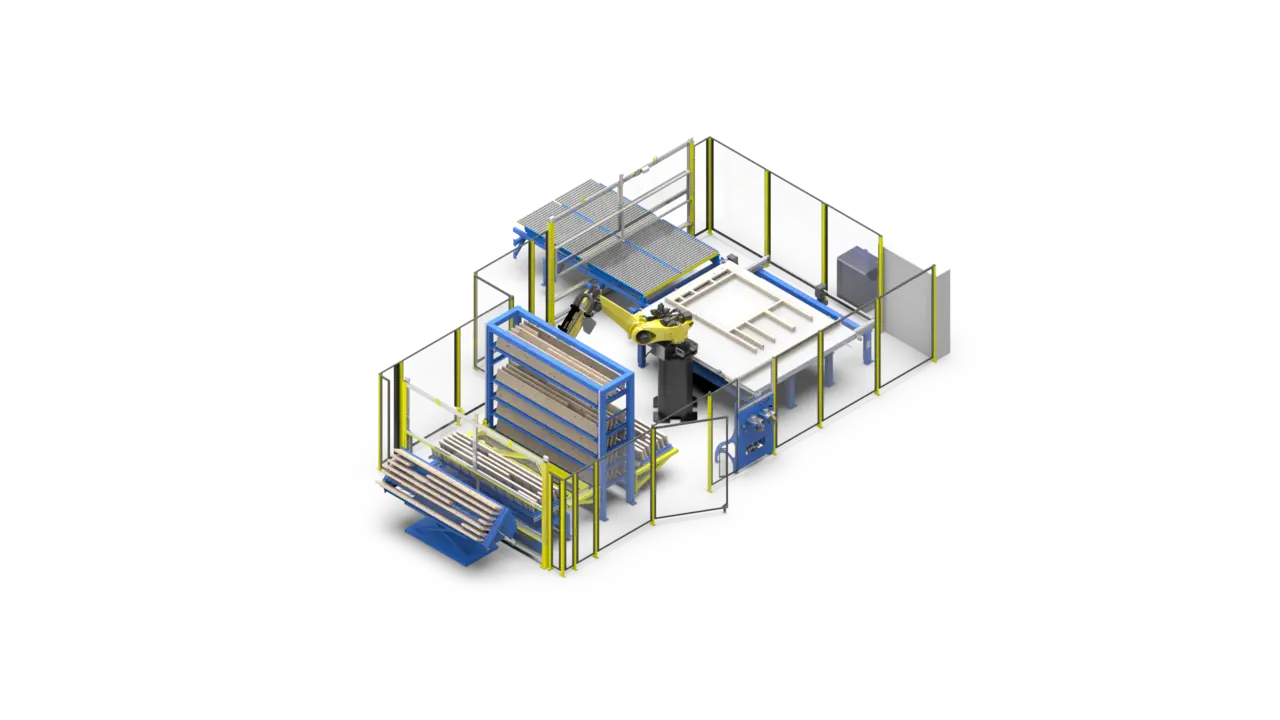
ZeroLabor Robotic Sub-assembly
Complex subcomponents built and assembled automatically, fed from a multi-level sub-element buffer.
Rough openings, multi-studs and H-elements produced automatically
Multi-level buffer feeds the line in the right sequence
Runs as a standalone cell or inside the full frame line
These are example layouts, not a fixed catalogue. Every AutoWall line is puzzled together around your products, output, factory and building system — we plan the exact configuration with you in a pre-study.
What this line includes
An AutoWall Frame line uses three station areas
Frame only: the framing station, a work area and stacking. Every AutoWall shares the same station platform — timber and light gauge steel each have their own framing station — so the full breakdown lives on the AutoWall line.
The four configurations share the same platform, the same data chain and the same areas. What differs is how much of the wall you close in the factory, and how much of that work you automate.
AutoWall Open Panels
One face closed in the factory, one left open through production. The original AutoWall, and on a single sheet layer the fastest line on the market.