Systems / AutoWall / Closed panels

AutoWall · both sides closed

AutoWall Closed Panels

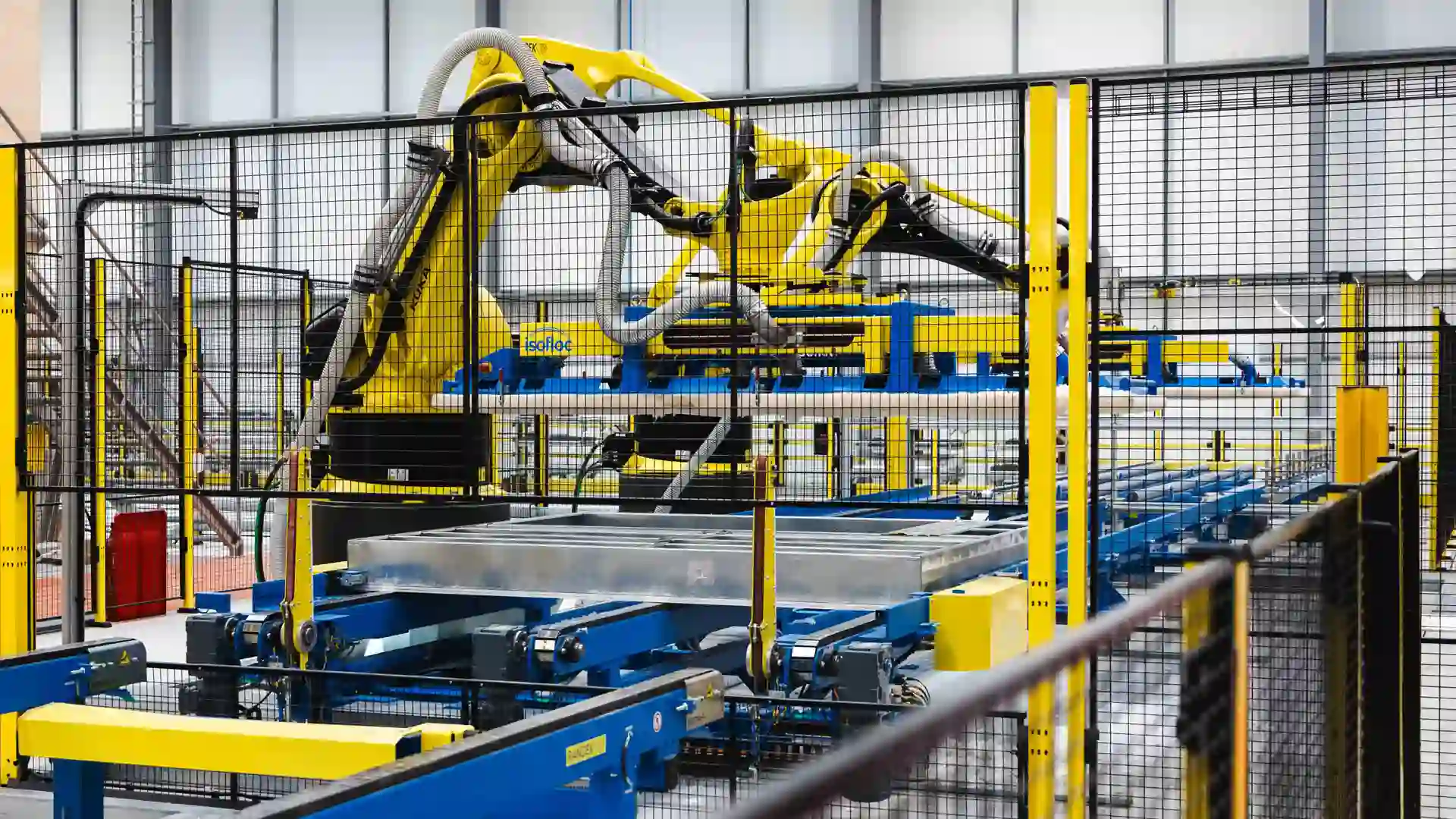
Suitable for manufacturers who prefer to build closed walls in their production process and add more value in the factory. The production line attaches screws, nails, clamps and membrane to both sides of the wall element, and mills and cuts the openings.

100–150 m
of wall per hour
3900 mm
max element height
4
line types, one base platform
Robotic insulation cell
ZeroLabor Robotic Insulation, between the two sheathing stations.
What the line does

Move the value indoors.

A closed element leaves the factory finished on both faces, insulated and membraned. That takes work off the site, where it is slower, weather-dependent and harder to inspect — and it puts that work where you can measure it.

  • Both faces sheathed, fastened, milled and cut from the same CAD file
  • Insulation fitted by hand, or blown in by ZeroLabor Robotic Insulation between the cells
  • Membrane applied and the element turned without cranes or manual lifting
  • You control every production step, and the data from every station
Example layouts

Two closed-panel layouts

A closed element leaves the factory finished on both faces, insulated and membraned. How much of that you automate is your choice: from a manual line with RB3 sheathing to a full double-sided line with robotic insulation.

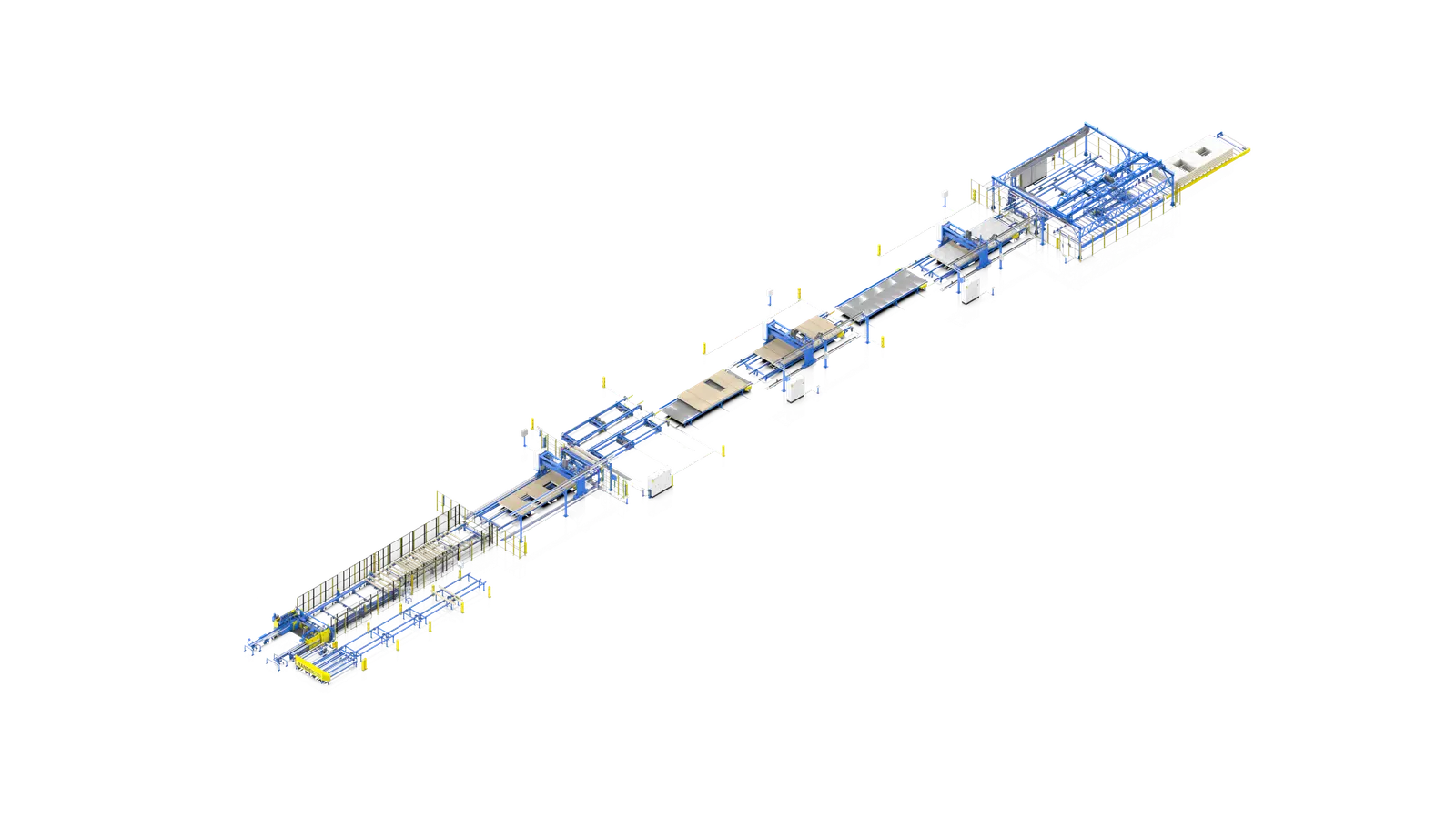
AutoWall closed-panel line with manual sheet placement, RB3 sheathing bridges, a turning table and manual insulation, isometric view

Manual line with RB3 sheathing

A lower-cost closed-panel line: the operator places sheets by hand, RB3 bridges fasten and cut, and the element is turned and insulated manually.

  • Manual sheet placement, RB3 bridges for fastening and openings
  • Turning table flips the element so both faces can be closed
  • Insulation fitted by hand — fewer automated steps, lower investment
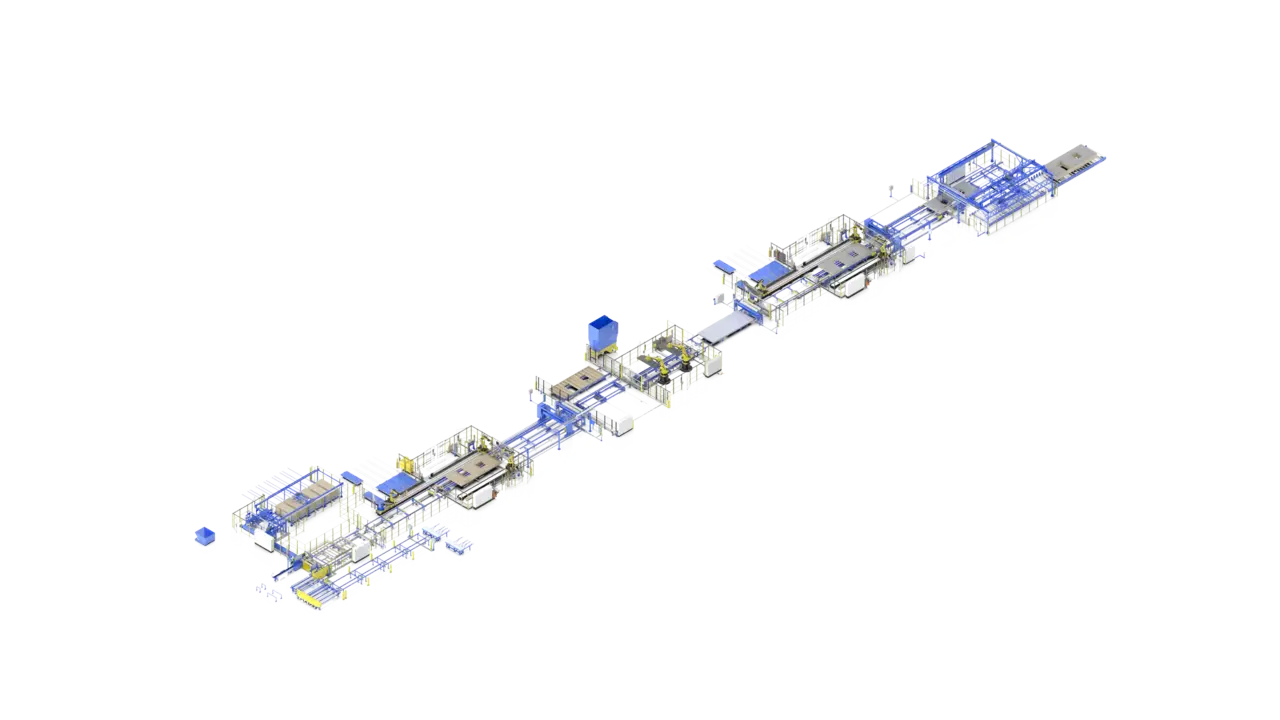
AutoWall closed line, R3 + robotic insulation + R3

Two R3 with Robotic Insulation

The most finished element the range can produce: two robotic sheathing cells with robotic insulation between them.

  • Two ZeroLabor R3 cells close both faces
  • ZeroLabor Robotic Insulation blows insulation into the cavities
  • Turning system flips the element without cranes or manual lifting

These are example layouts, not a fixed catalogue. Every AutoWall line is puzzled together around your products, output, factory and building system — we plan the exact configuration with you in a pre-study.

What this line includes

An AutoWall Closed Panels line uses the full station set

Framing, sheathing, insulation, membrane, turning, a work area and stacking — both faces closed indoors. Every AutoWall shares the same station platform, and the timber and light gauge steel each have their own framing station, so the full breakdown lives on the AutoWall line.

  • Framing
  • Sub-assembly
  • Sheathing
  • Membrane
  • Turning
  • Insulation
  • Manual work
  • Stacking & storage

See how each station is built → Timber or light gauge steel → Element dimensions →

The other three

One base platform, four line types

The four configurations share the same platform, the same data chain and the same areas. What differs is how much of the wall you close in the factory, and how much of that work you automate.

AutoWall Frame

Automates the framing process and nothing beyond it. For frame builders, and for anyone who sheathes and finishes by other means.

Frame only · See the system →

AutoWall Open Panels

One face closed in the factory, one left open through production. The original AutoWall, and on a single sheet layer the fastest line on the market.

One side closed · See the system →

AutoWall Mixed Panels

One start flow producing several different end products. For modular manufacturers and for a genuinely diverse product range.

Mixed output · See the system →
Your next factory starts here

Talk to Randek

Tell us what you build today and where the bottleneck is. We will point you to the right team: locally where we have one, from Sweden where we do not.

Talk to your team